Construction of a new production site: project organization
Would you like to set up a new production site? In this article, we show…
BLOG series Automated storage systems
Our series of blog articles on automated storage systems enters the next round. In this article, we look at the carousel system. These compact solutions combine efficient use of space with fast access times and follow the “goods-to-man” principle. Whether vertical or horizontal carousels: they reduce distances, increase picking performance and are ideal for companies with limited space and high access frequency. In the following article, we provide a structured overview of the most important system types and their special features.
As a compact and automated solution, a storage carousel system for small parts enables efficient use of space and fast access. Typical systems such as vertical and horizontal carousels work according to the “goods-to-man” principle and significantly reduce walking distances and picking times. They are particularly suitable for items with high access frequency and limited space. Thanks to their closed design, they not only offer protection against dust and unauthorized access, but can also withstand special climatic conditions. Modern variants can be integrated into ERP and WMS systems and support precise inventory management. In addition, circulation systems tend to be used for limited capacities of up to 50m³. For larger storage capacities, automated small parts warehouses with storage and retrieval machines, shuttles or cube storage solutions are generally preferred.

Senior Manager Logistics
Are you looking for a suitable automated storage system and need support? Send me your message and I will get back to you as soon as possible.
There are a large number of different systems. Below you will find the best-known circulation systems with a brief description.
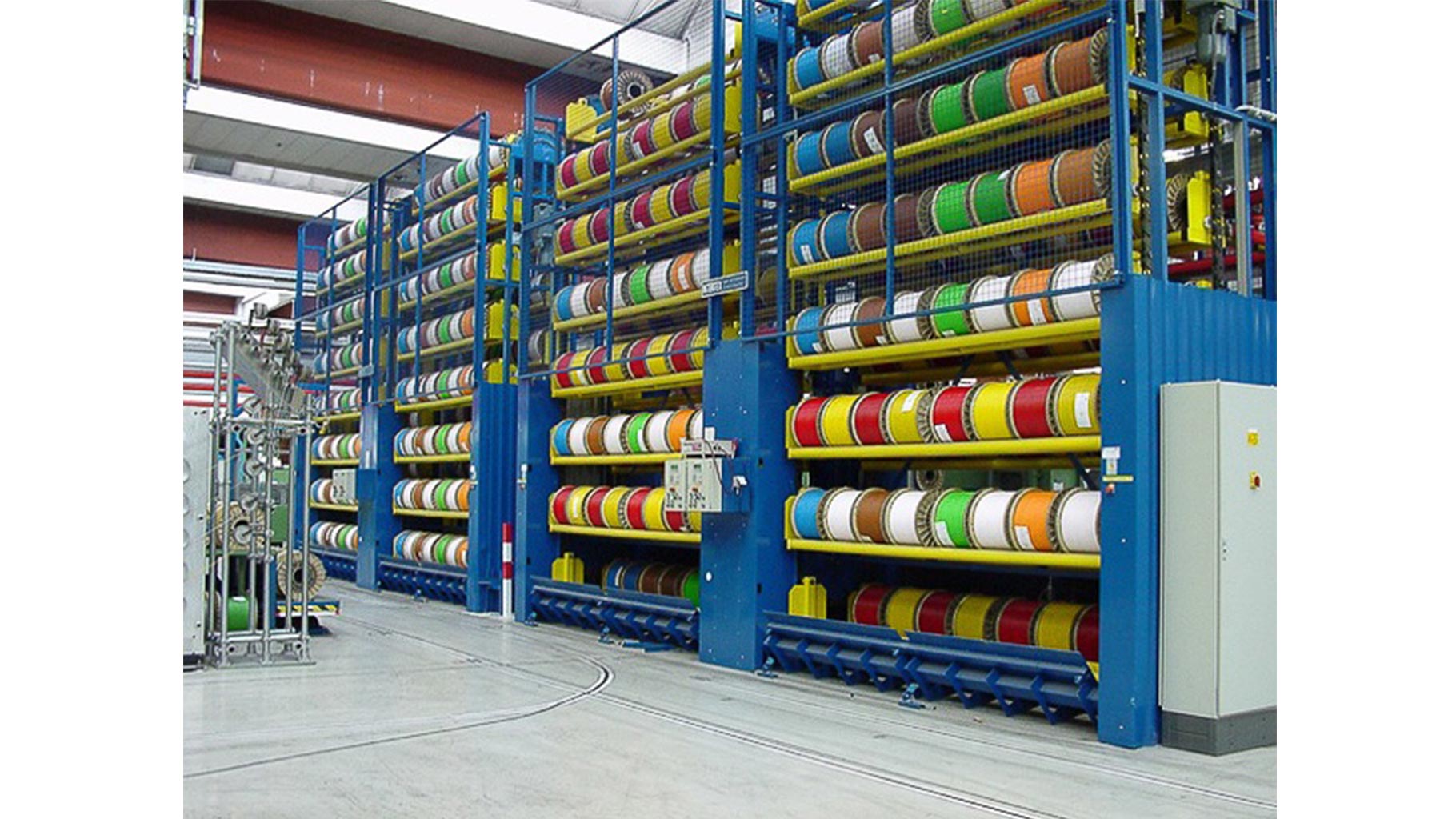
In a paternoster, also known as a tray or trough, storage carriers move in a closed circuit, comparable to a carousel. Consequently, the carriers are attached to two circulating chains and move continuously upwards at the front and downwards at the rear. The user then selects the desired storage location via a control panel, whereupon the corresponding carrier moves to the ergonomically more favorable removal point.
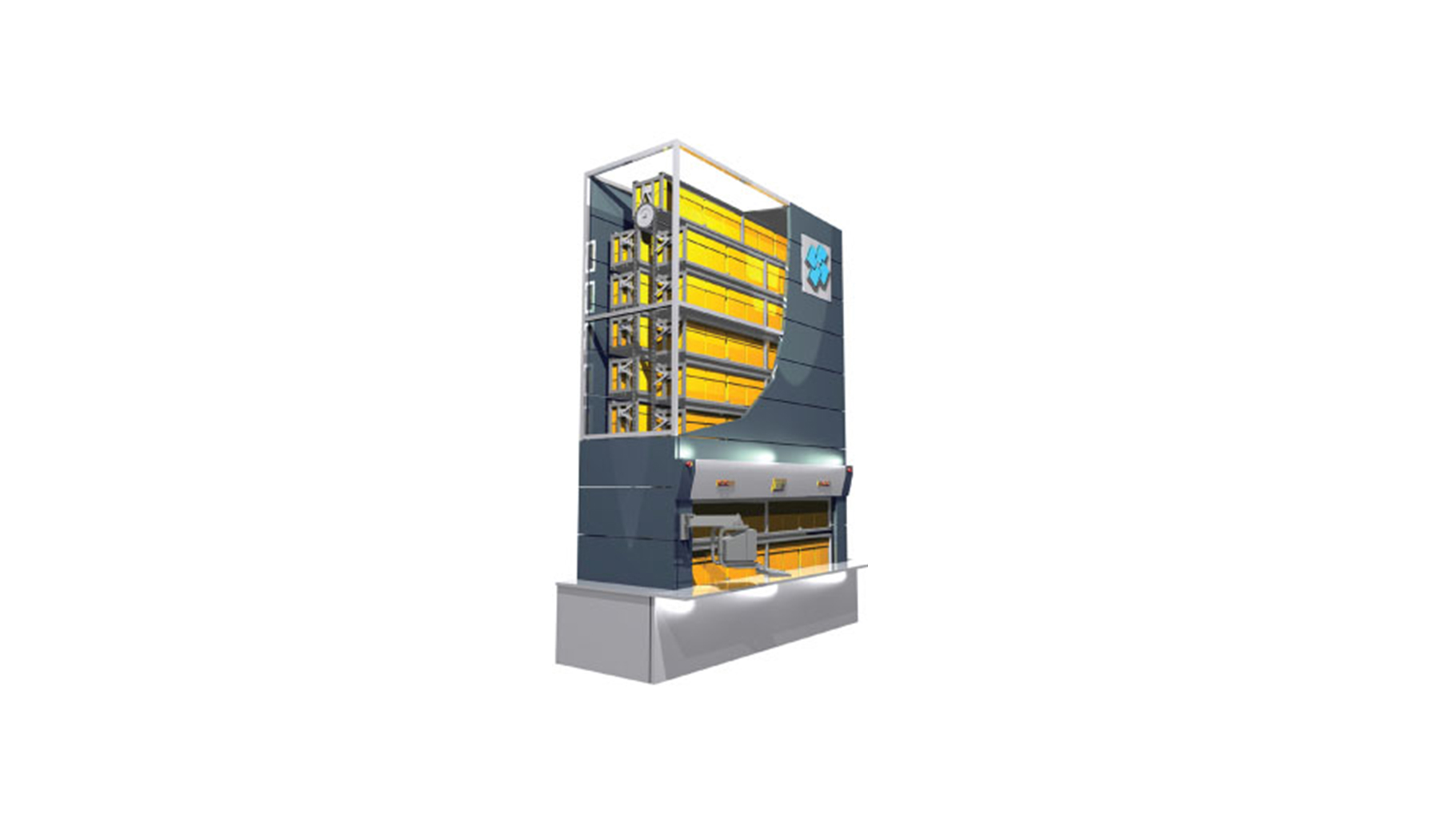
Depending on the requirements of the stored goods, paternosters can also be open and dispense with cladding. Typical openly stored products are cable drums, tires or carpets.
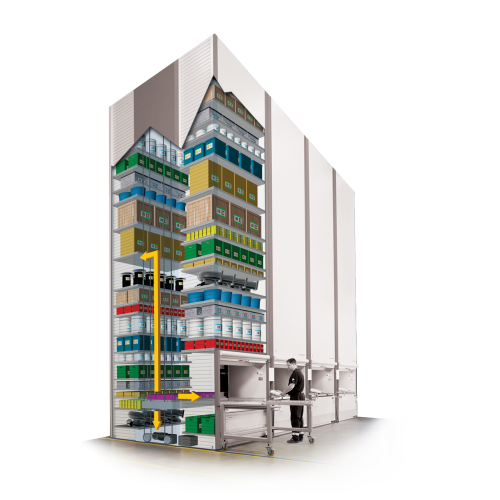
Storage lifts, lift modules or lean lifts are different names but all have the same basic structure and the same functions. These automated storage systems consist of two opposing rack columns with variable shelf heights and a central, vertically moving goods elevator (extractor). The goods to be stored are placed on trays, which are automatically deposited and transported to the removal opening as required. The carousel systems can measure the height of each tray and store it in a space-optimized manner, thus achieving very high space utilization. They are operated and accessed via a central terminal, which can also be integrated into warehouse management systems. The systems are ideal for the safe, ergonomic and efficient storage of small parts, tools or sensitive components.
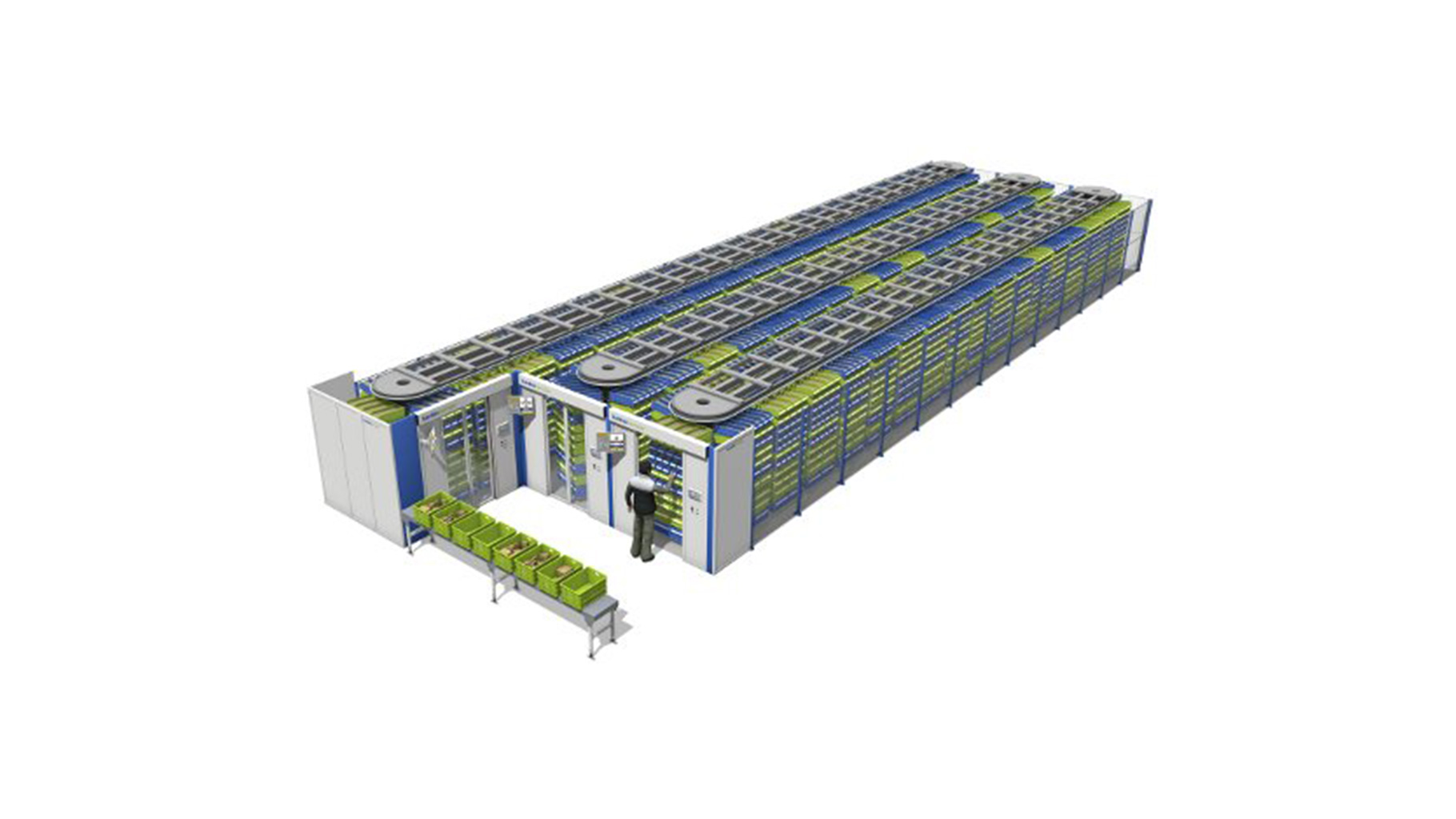
Horizontal carousels are automated storage systems in which several storage containers or trays move horizontally in a closed circuit. The basic structure consists of an oval or rectangular frame in which the trays are mounted on guide rails or chains and rotate using an electric motor. When an item is requested, the circulation system automatically moves the corresponding tray to the operating opening, where it is removed ergonomically at handle height. The system is controlled via a terminal or a warehouse management system, enabling precise and fast picking. Horizontal carousels are particularly suitable for storage areas with limited room height and high picking frequency.
Compared to an automated small parts warehouse (AS/RS) with a storage and retrieval unit (SRU) or shuttle system, carousels offer certain advantages, especially for smaller storage capacities and simpler requirements. Not only are they significantly more compact and require less infrastructure, they are also usually quicker and cheaper to install. Thanks to direct operation at the picking point, they enable very ergonomic and uncomplicated picking without additional conveyor technology. Maintenance costs are lower as the system is mechanically simpler than complex miniload or shuttle systems. For stocks with a medium volume, high access frequency and a manageable variety of items, carousels offer an economically attractive solution. They can also be integrated into existing building structures to save space, particularly where ceiling heights are restricted or floor space is limited. Furthermore, the systems are easy to move and can be reassembled at other locations with little effort. As the systems can be designed to be closed, the stored goods in the circulation system can be protected from the environment (e.g. dust). In addition, specific climatic conditions can be ensured in the carousel system.
Circulating racks are characterized by their high picking performance and compact design. Depending on the system design and article structure, up to 150-300 picks per hour are possible, especially with optimum operator organization and the use of modern pick-by-light systems. The continuous movement of the trays enables short access times, as the stored goods are transported directly to the operator. The carousels are particularly efficient with high access frequencies and a low to medium variety of items. They can also be scaled using multiple operator openings or parallel systems. Overall, they offer an efficient solution for fast, ergonomic picking processes in a limited space.
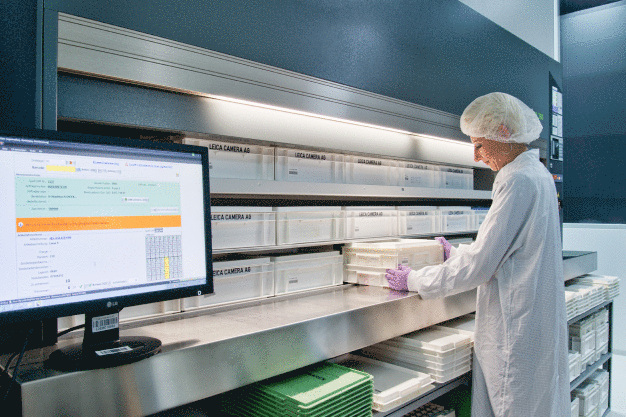
A variety of container sizes can be used flexibly in carousels, depending on the carrier or tray size of the respective system. Standard carrier depths of around 400 to 800 mm and widths between 600 and 2,500 mm are common, allowing storage containers of different sizes to be accommodated efficiently. The height of the containers varies depending on the system, but is usually in the range of 100 to 400 mm – adapted to the clear height between the beams. Some manufacturers also offer height-adjustable partitions or modular inserts to combine containers of different sizes within a carrier. This makes carousels suitable for small parts as well as for larger, bulkier stored goods with a low weight. The choice of bin size ultimately depends on the item structure, gripping space and desired picking performance.
Recirculating storage systems place certain requirements on their environment in order to ensure smooth and safe operation. It is important to have a level, load-bearing floor that can support the dynamic loads of the system. The room height must be sufficient to accommodate the circulation system including the maintenance area, whereby escape routes and safety distances must also be taken into account. A constant room temperature within the recommended range (usually between 5 °C and 40 °C) protects the drive technology and electronics from failure. In addition, the environment should be as dust-free and dry as possible, especially when storing sensitive or electronic components. For certain applications, such as in medical technology or electronics production, special requirements such as ESD protection, cleanroom suitability or access controls must also be implemented.
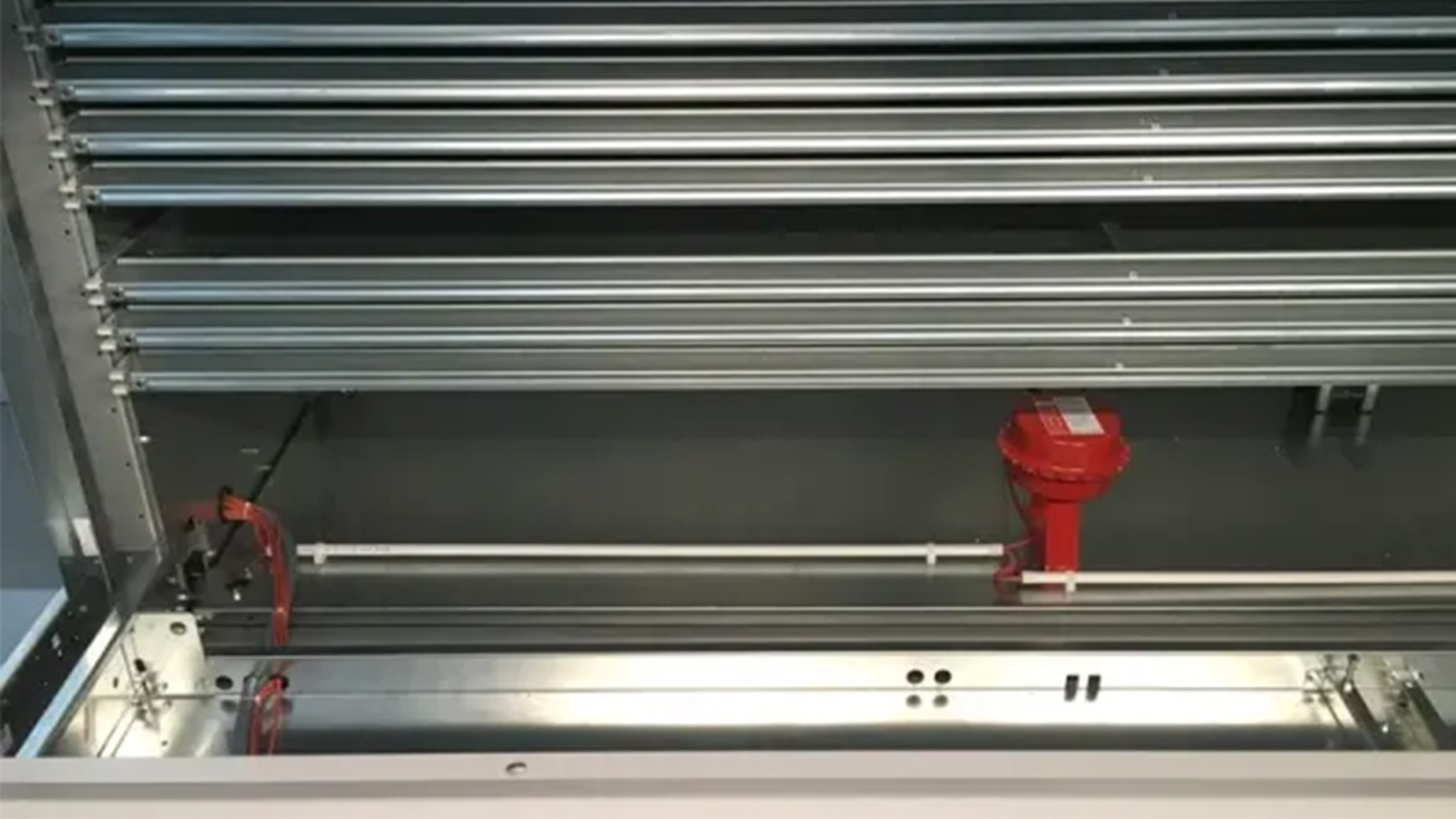
The possible fire protection measures vary depending on the type of warehouse, stored goods and applicable regulations (e.g. DIN, VdS). In a circulating storage system, a combination of technical monitoring, structural measures and organizational specifications is required. Integrated smoke or heat detectors detect potential sources of fire at an early stage and can automatically shut down the system. Depending on the application, sprinkler systems, gas extinguishing systems or special extinguishing nozzles are used inside the racking. In addition, fire dampers at the operating openings can prevent fire or smoke from entering the surrounding area. Regular maintenance of the safety equipment and connection to the central fire alarm system are also important. A well thought-out fire protection concept ensures safety while at the same time protecting the stored goods and people.

Manager, Hamburg
His focus is on production technology. His experience and knowledge include production management, factory planning, value stream mapping, lean management, intralogistics planning and change management.



Senior Manager, Munich
The industrial engineering graduate advises his clients on issues relating to warehouse and logistics planning and the digitalization of logistics (particularly in the ERP, WMS and TMS environment). He also provides clients with comprehensive support in the areas of operations management and strategy.
Would you like to set up a new production site? In this article, we show…
The Exotec Skypod automated storage system combines modern technology with high flexibility - for greater…
The interview series "Global Operations Footprint" shows how managers shape global production sites. In this…
You need to load content from reCAPTCHA to submit the form. Please note that doing so will share data with third-party providers.
More InformationYou are currently viewing a placeholder content from Turnstile. To access the actual content, click the button below. Please note that doing so will share data with third-party providers.
More InformationYou are currently viewing a placeholder content from Facebook. To access the actual content, click the button below. Please note that doing so will share data with third-party providers.
More InformationYou are currently viewing a placeholder content from Instagram. To access the actual content, click the button below. Please note that doing so will share data with third-party providers.
More Information