Production
Green Factory
Green Factory for Future-Proof Production
A Green Factory combines sustainable production with measurable economic success. By using resources efficiently, reducing waste, and optimizing processes, companies not only lower their environmental footprint but also improve costs, productivity, and competitiveness. We support you in making your production future-proof, step by step. With a clear strategy, practical measures, and meaningful metrics, we lay the foundation for sustainable improvements.

Sustainability Footprint
Making sustainability measurable through key figures
The world is increasingly focusing on sustainability. It is therefore becoming increasingly important for companies to first quantify their environmental impact and then take measures to minimize it. In order to be able to make a meaningful assessment of environmental impact, ESG indicators have become established – i.e. values that measure a company’s impact on theenvironment and society(social) and evaluate corporategovernance.
These key figures help companies to make their sustainability footprint measurable in all areas, actively shape the transformation to a green factory and are also becoming increasingly important for investors. Factories and logistics chains in particular require considerable resources. We offer you solutions to measure, track and improve sustainability in production and logistics. In doing so, we are guided by the key figures that are also used for ESG ratings. With our advanced metrics and analysis tools, we empower you to understand the environmental impact of your business and then take targeted, effective action to reduce yourcarbon footprint and other environmental impacts.
Our Service Packages:
- Analyze current reporting structures
- Combining the goals of profitability and sustainability
- Develop meaningful key figures to quantify sustainability
- Support your teams in collecting the key figures
- Create dashboards for sustainability officers and management
- Define target values and work out areas for improvement
Benefits for you:
- Transparency Regarding the Current Status of Your Factory
- Reliable ESG metrics for management, investors, and stakeholders
- Basis for identifying areas of action and measures
- Medium- and long-term improvement of your sustainability ratings and certifications
- Ongoing value after a one-time setup
- Transparent Criteria for Decision-Making Processes Through Key Performance Indicators

Sustainability strategy for the Green Factory
Shaping sustainability for the long term
In companies that have not adopted a clear sustainability strategy, the measures to promote sustainability and the exact goals to be achieved are usually only vaguely defined. This not only entails risks because environmental impacts are ignored or legal requirements are disregarded – it also means that major economic opportunities are overlooked.
Economic, ecological and social sustainability is not an end in itself, but helps to avoid inefficient processes and therefore unnecessary costs. When developing a strategy for your company, it is important to consider not only environmental issues, but also social and governance issues, such as workplace ergonomics or your shift systems.
We are happy to support you in developing a customized sustainability strategy that defines your long-term goals for production and logistics. With our expertise and tools, we help you to minimize your environmental impact, increase your efficiency in the use of resources and thus strengthen your competitiveness at the same time. This is how we make your factory fit for the future as a green factory.
Our Service Packages:
- Work out medium to long-term corporate goals
- Analyze ongoing sustainability initiatives and projects
- Summarize factory key figures in the area of sustainability
- Describe the vision for sustainable production
- Define target values for the green factory and the green warehouse
- Identify fields of action and develop initial measures
Benefits for you:
- Greater resource efficiency and long-term cost reduction
- Lower Risks by Taking All Relevant Regulations into Account
- Greater employee retention and higher levels of engagement within the company
- A competitive advantage in recruiting young professionals
- Proactive rather than reactive adaptation to regulatory requirements
- Long-term stability of the company through sustainability strategies

Philipp Kappus
Senior Production Manager
Feel free to contact me!
Would you like to make your production or logistics more sustainable? If so, just send me a message and I’ll get back to you right away.
CO2 reduction
Planning and implementation of Green Factory measures
Reducing direct and indirect CO2 emissions is a task that all companies have to face. This is a major challenge, especially in production facilities and logistics. To achieve the goal of climate-neutral production, companies need solutions that reduce CO2 emissions, especially in the areas of energy (heating, cooling, lighting, electricity and compressed air) and technology (automation, digitalization and processes).
We help companies to significantly reduce their Scope 1 and Scope 2 emissions. To do this, we rely on innovative technologies, proven strategies and a calculation tool that we have developed ourselves. We work with you to analyse your operating processes and optimize them to minimize your environmental impact. Our main aim is to identify the greatest levers for reducing emissions. To do this, we take a close look at how efficiently the use of your facilities is planned and controlled. Together we will shape your sustainable future.
Our Service Packages:
- Evaluate and optimize consumption for different types of energy
- Determine emissions per product and system
- Check processes and technologies for inefficiencies
- Work out the costs and benefits of individual CO2 reduction measures
- Developing innovative solutions
- Support the implementation of the measures and check their success through monitoring
Benefits for you:
- Reducing your emissions often results in lower energy and resource costs
- Transparency regarding emission sources and the greatest potential for reductions
- Prioritized measures with a demonstrable impact on CO₂ emissions
- Continuous improvement of processes and energy efficiency
- Linking Economic Efficiency and Sustainability Goals
- Improved sustainability metrics and certifications
Sustainable factory and logistics planning
New and expansion planning for your factory, but sustainable
Many companies are faced with the challenge of wanting to make their holistic factory planning more sustainable, but are often unsure of what options are available to them and what benefits they can expect, for example. sustainable building or production design. This uncertainty means that opportunities for both savings and environmental protection remain untapped.
We offer you a comprehensive and long-term solution. To achieve this, we not only take a detailed look at the emissions that will be generated during the planning phase of your production facility, but also take future challenges into account, such as the adaptability of the building. In this way, we can extend the life cycle of your factory, as converting an existing building is generally more sustainable than building a new one.
Our experts offer you a range of options for designing your building sustainably and developing it into a green factory, from renewable energy to resource-efficient logistics. We are always aware of and take into account the latest funding opportunities. Together with you, we will develop a sustainable factory that is not only environmentally friendly, but also increases your competitiveness.
Our Service Packages:
- Collect and evaluate detailed data on the factory’s CO2 emissions during the planning phase
- Develop strategies to reduce emissions compared to the current situation
- Select sustainable construction technologies and energy sources for eco-friendly building design
- Future-oriented planning by taking changeability and possible expansions into account
- Implementing resource-efficient logistics solutions
Benefits for you:
- Efficient and resource-efficient processes
- Future-proof locations with a high degree of adaptability
- Less dependence on market price trends and supply bottlenecks
- Optimal Use of Grants and Investment Opportunities
- Strengthening the Company’s Image and Attractiveness as an Employer
- Ensuring Long-Term Competitiveness
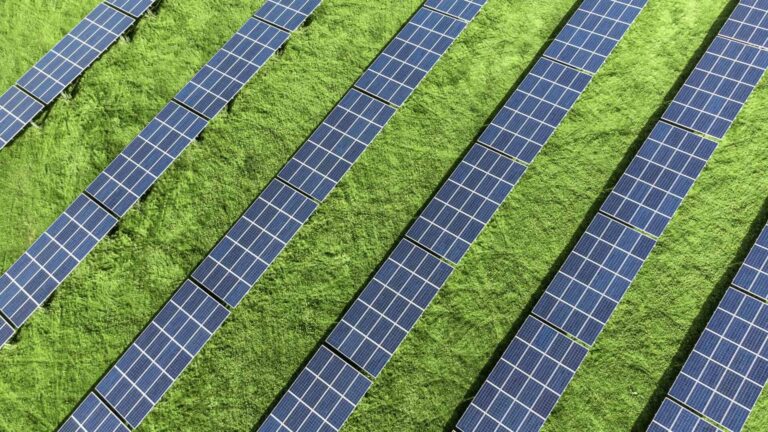
Digital and sustainable in the Green Factory
Exploiting the synergy effects of digitalization
Digitalization can open up enormous potential for companies, enabling them to become more efficient and competitive. However, digitalization is often seen as the sole responsibility of the IT department and not as a holistic project that affects processes throughout the company and can be extremely important when implementing sustainability goals. As a result, many companies miss the opportunity to exploit the synergy effects that digitalization makes possible.
We attach great importance to proposing a holistic solution that bridges the gap between digitalization and sustainability. To this end, we integrate your sustainability strategy and your sustainability goals into your digitalization project from the outset. In concrete terms, this means, for example, that we also take sustainability requirements into account when introducing new software such as ERP, WMS or MES and ensure that the upcoming changes have a positive impact on your key figures. We always start by developing target processes with the individual specialist departments and then use holistic digitalization to maximize your benefits – for a future-proof and efficient green factory.
Our Service Packages:
- Integrating sustainability strategy into digitalization projects
- Optimizing processes in the context of digitalization with regard to sustainability
- Supporting Sustainability Goals Through Digital Tools
- Implementing Digital Solutions for the Green Factory
- Designing Change Management for New Digital Processes
- Align software selection with the sustainability strategy
- Automate the collection and analysis of sustainability metrics
Benefits for you:
- Achieving Better Results by Combining Digitalization and Sustainability
- Optimized Performance Through Streamlined and Transparent Processes
- Measurable Progress Toward Sustainability and Efficiency Goals
- Future-Proof IT Investments with Strategic Value
- Greater Acceptance and Successful Digital Transformation Through Active Change Management
FAQ
How can a factory be designed sustainably and adapted to new requirements over the long term?
Sustainable factory planning considers not only energy and resource consumption at the time of commissioning, but also the factory’s entire life cycle. Adaptable buildings, flexible production spaces, expansion options, resource-efficient logistics, and sustainable energy supply enhance long-term adaptability. Rothbaum Consulting integrates these aspects into factory and logistics planning from the outset, while also evaluating options for renovating and upgrading existing buildings.
What advantages does a Green Factory offer manufacturing companies?
A Green Factory can not only reduce environmental impact but also generate economic benefits. Lower energy and resource consumption, more efficient processes, and reduced waste often simultaneously lower costs and CO₂ emissions. In addition, transparent ESG metrics, sustainable working conditions, and future-proof production enhance regulatory compliance, employer appeal, and long-term competitiveness.
How can companies automatically collect and analyze sustainability metrics?
The automated collection of sustainability metrics requires a consistent database and the integration of relevant data sources. Energy consumption, production data, plant information, and other ESG-related data can then be centrally analyzed and visualized in dashboards. Rothbaum Consulting provides support in defining key performance indicators, establishing the data structure, and integrating digital solutions for continuous sustainability monitoring.
Wie können Unternehmen ihre Scope-1- und Scope-2-Emissionen in der Produktion reduzieren?
Scope 1 emissions result, among other things, from direct fuel consumption and a company’s own facilities, while Scope 2 emissions are primarily associated with purchased energy. In manufacturing companies, relevant levers for reduction therefore often lie in energy supply, heating, cooling, compressed air, lighting, and production technologies. Our experienced consultants analyze the respective emission sources and develop measures to specifically reduce Scope 1 and Scope 2 emissions.