Supply Chain
Circular economy for sustainable supply chains
Circular economy consulting for a profitable and sustainable circular economy
The circular economy and sustainable supply chains create the basis for an economically and ecologically sustainable industry. Processing, recycling and reuse conserve resources, reduce emissions and open up new economic potential. Compared to the linear economy, the circular economy offers higher contribution margins per product and continuous revenue streams over the entire product life cycle. With our circular economy consultancy, we support companies in establishing sustainable supply chains and successfully implementing circular business models – from production technology to the circular supply chain.

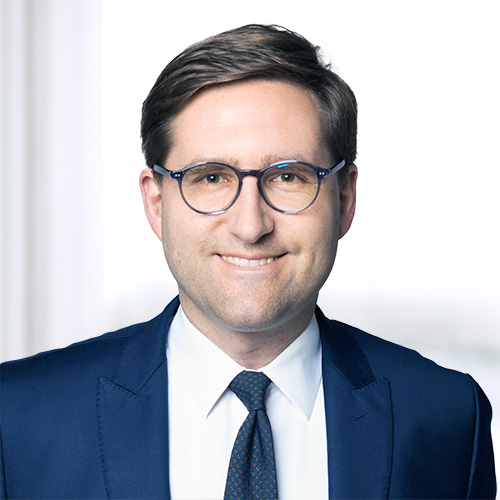
Dr.-Ing. Kai Philipp Bauer
Senior Manager Supply Chain Management
Talk to me!
Would you like to take advantage of the economic opportunities of the circular economy for your company? Then please send me your message.
Circular Business Model
Circular economy in companies
With the Circular Economy Action Plan, European policymakers have created a regulatory framework for the sustainable economy of the future. However, for the circular economy to be successfully implemented in companies in the long term, it must first and foremost be profitable. The key question is therefore: how can companies gradually transform their linear business model into a profitable circular business model and create sustainable supply chains?
With our circular business model, we not only support this transformation process as a circular economy consultancy, but also prepare your company for the requirements of the circular economy. To do this, we analyze your existing linear business model and work with you to define the scope and goals for the circular business model. Our Circular Economy consultants work with you to develop the value proposition, the value creation architecture and the revenue model. The value proposition is based on customer needs in terms of functionality and environmental compatibility.
The value creation architecture defines the design of the product portfolio and the key elements of the sustainable supply chain that are necessary for the provision of services. The revenue model therefore describes the sources of income, both through the sale of new and refurbished products and through the pricing of services as part of the usage and refurbishment cycles.
Service packages
- Analyze existing business model and define goals
- Define sustainable value propositions for products and services
- Developing a recyclable product portfolio
- Formulating a strategy for a circular supply chain
- Creating a sustainable revenue model for the circular economy
Your benefit:
- Development of new markets and customer groups
- Increase the profitability of your company
Circular Product Design
Consider circularity in the product architecture
The deep and sometimes irreversible integration of components with different lifetimes limits the recyclability of your products. Wear due to mechanical or chemical influences as well as time-related material changes (e.g. loss of function due to leakage or loss of elasticity) limit the service life. An everyday example is the modern car: the service life of the bodywork is often many times longer than that of the combustion engine, yet engine damage can often lead to total economic loss. Design elements and electronic systems often have even shorter life cycles.
In order to enable a functioning circular economy in companies, the product architecture must be rethought on the one hand and designed in a modular way on the other. The aim of our circular economy consulting is to create interchangeable functional units that extend the overall useful life of the product. This reduces costs and waste for remanufacturing. Products that are designed according to these principles can therefore go through a large number of use and reprocessing cycles.
Products in integral design must be broken down into their starting materials and processed. Mixing of materials should be minimized and irreversible contamination, e.g. with operating materials, should be spatially limited. Ideally, detachable connections between materials or areas that can and cannot be processed are used. As part of a consultancy service for the circular economy, companies are supported in creating the conditions for efficient recycling and a closed material cycle as early as the product development stage.
Service packages
- Analyze usage and wear behavior of the products
- Define service life-oriented functional units
- Modularize product architecture
- Quantify potential savings in costs and emissions
Your benefit:
- Increase in sales per product over the entire useful life
- Savings in material and procurement costs through multiple use
- Minimization of waste in product disposal
- Reducing the ecological impact of your products
Circular Supply Chain Process Design
Operational business processes for the circular economy in companies
The integration of the circular economy into day-to-day business requires new supply chain processes. However, a lack of information from users makes it difficult to forecast the goods to be returned. At the same time, dynamic planning and control of reverse logistics involving several partners enables more precise planning of supply chain processes for sustainable supply chains.
Our circular economy consultancy helps you to achieve a predictive circular economy: we create planning security for you in your circular economy. We also develop transparent processes for your reverse logistics and remanufacturing operations. We adapt the processes to your business model so that value-added services can be carried out smoothly by service providers.
Service packages
- Developing a planning tool for the circular economy
- Designing reverse logistics processes
- Defining the value-added services of logistics service providers
Your benefit:
- Greater planning security in the circular economy
- Leveled utilization of your preparation area
- SiMaximize your profit through cooperation with logistics partners
Circular Supply Chain Network Design
Efficient networks for the circular economy in your company
The transformation from a linear to a circular economy in companies entails far-reaching changes in the flow of goods in the supply chain. Companies not only have to deliver their products to customers, but also efficiently master the complex task of product return. By its very nature, product return is less clearly defined than the distribution task and therefore requires a greater degree of flexibility.
Our circular economy consultants create the necessary structures in your supply chain network for efficient forward and reverse logistics in the circular economy. As part of our circular economy consulting services, we rely on the digital supply chain twin and supplement existing networks with regional or local collection and sorting points and corresponding transport relationships as required. This allows you to make optimum use of your existing resources, such as storage and transport capacities, to achieve an economical and sustainable circular economy.
Service packages
- Evaluate the circularity of the existing supply chain network
- Developing digital supply chain twins for forward and reverse logistics
- Designing circular structures for the supply chain network
Your benefit:
- Functioning logistics for your circular economy
- Optimum utilization of logistics resources
- Use of regional collection and sorting points
Circular Production Process Design
Efficient factories for processing and recycling
Your factory needs to be redesigned to enable the internal reconditioning of products. However, the resources available today are not sufficient to cover the entire remanufacturing process. Processes such as inspection, disassembly, repair, reconditioning and quality testing are therefore required for the returned goods. The reconditioned products then have to be brought back onto the market, which requires new planning and management of your recycling and remanufacturing processes.
With our expertise in production process and factory planning as experienced consultants for the circular economy, we develop your factory for product obsolescence. We place particular emphasis on the use of renewable energies in order to maximize the sustainability of your factory. As part of our circular economy consulting, we create a flexible factory planning layout that can be adapted to different products for overhaul and repair. We also define your production processes, from the inspection of products through to the dispatch of reconditioned products.
Service packages
- Planning a factory for your circular economy
- Develop remanufacturing processes
- Efficiently plan production resources for the circular economy
Your benefit:
- Flexible factory for the overhaul of products
- Efficient use of your production capacities
- Sustainable factory
Circular Production Technology
Thinking circularity in product development
The manufacture of a product creates important prerequisites for its suitability in the circular economy. The production technologies, process chains and materials used have a significant influence on the efficiency and costs of recycling or reprocessing. This aspect is particularly important in manufacturing processes for surface treatment, joining and assembly processes.
Circularity – alongside functionality and manufacturing costs – should therefore be a key objective when selecting production methods and designing process chains. As part of our circular economy consulting, we at Rothbaum design your process chains according to circular principles and work closely with your development department and industrial engineering. In other words, we enable your products to use production technologies that are compatible with the principles of the circular economy.
Service packages
- Analyze existing production technologies
- Adapting products conceptually and constructively
- Designing cycle-compatible process chains
Your benefit:
- Improved efficiency and costs for recycling and refurbishment
- Active contribution of your production to climate protection
FAQ
How does a circular supply chain transform existing supply chains?
A circular supply chain expands traditional supply chains to include return, processing, and recycling processes. In addition to product delivery, reverse logistics, collection points, sorting, remanufacturing, and recycling must also be efficiently organized. Digital planning, transparent processes, and a suitable supply chain network lay the foundation for economical and sustainable material cycles.
What is the significance of circular production technology for the circular economy?
Circular production technology ensures that production methods and process chains are designed from the outset to facilitate later reuse or reprocessing. The selection of suitable manufacturing technologies, materials, and joining and assembly methods significantly influences how efficiently products can be repaired, disassembled, or recycled. In the long term, this reduces resource consumption, recycling costs, and environmental impact, while increasing the economic viability of the circular economy.