Production
Production process
The heart of your business – optimal production processes
Efficient production processes are crucial for competitiveness and profitability, especially in the face of rising cost and time pressures. As an independent consulting firm, we help you analyze, optimize, and future-proof your assembly and manufacturing processes. Together, we create transparency, improve processes, and enable informed decisions based on reliable data.

Assembly and manufacturing processes
Process management tailored specifically to your production
Manufacturing and assembly are among the core processes in any manufacturing company. However, they can frequently run into problems if the processes are not seamlessly integrated into the overall production workflow. For example, output may be lower than expected, or delays may occur.
That is why it is important to align these process flows with all upstream and downstream steps. This requires not only the essential technical expertise, but also a holistic view of all processes related to production. For the powder coating process, for example, numerous technical aspects are essential. However, many other parameters also play a key role in ensuring the effective and uninterrupted utilization of your capacity: What is the optimal batch size? In what order should the work steps best be carried out during color changes? All of this must be taken into account during the design of the systems, and then in production planning and control during operational use.
Another example is assembly line production: How should the assembly processes be designed in this context? How can the cycle times for the individual assembly steps be coordinated so that transitions can be carried out with minimal inventory while ensuring that the assembly line operates at a consistently even capacity? With our extensive experience across various industries, we support you in seamlessly integrating such operations throughout the entire process chain and designing them to be robust and resistant to disruptions. This allows you to fully realize the potential inherent in your manufacturing and assembly processes.
Our Service Packages:
- Optimizing production processes in manufacturing and assembly
- Selecting an ideal manufacturing and assembly concept
- Identify technical parameters and framework conditions
- Identify necessary interfaces within the overall production context
- Analyze the requirements for each interface
- Integrate all procedures into the process chain as effectively as possible
Benefits for you:
- Ensuring a technically sound process design
- Cost efficiency through streamlined, harmonized processes
- Inventory Optimization
- Optimized manufacturing and assembly concept

Philipp Kappus
Senior Production Manager
Feel free to contact me!
Are you looking to make targeted improvements to your process chain? Then please send me a message. I will get back to you as soon as possible.
Support processes
Support tailored to your production needs
Toolmaking, maintenance, and cleaning services are essential—no factory can operate smoothly if the traditional support processes, from the workshop to facility management, aren’t functioning properly. These areas can even seriously hinder production and assembly processes, whether due to a lack of communication and digitalization, or due to inconsistent interfaces or standards.
Our optimization strategy takes a two-pronged approach: On the one hand, we are happy to advise you on how to better align your support services with your core processes. To this end, we leverage our expertise in operational excellence to ensure that internal departmental processes are properly aligned. On the other hand, we examine your entire value stream and establish appropriate interfaces to harmonize the various areas.
In addition, we are examining the potential for optimization within the support functions themselves. How can we make the most of their capacity to achieve the best possible results? How can we use appropriate digital tools to make work in support processes more efficient and transparent? This also enables us to use predictive maintenance based on real-time data to identify early on when a machine needs to be repaired or even replaced—even before actual disruptions to operations occur.
Our Service Packages:
- Improving Operational Processes in Toolmaking, Maintenance, and Facility Management
- Comprehensively analyze core and support processes
- Harmonize interfaces between departments
- Improve capacity planning
- Digitize support processes
Benefits for you:
- Efficiency gains in support functions
- Less silo mentality; instead, streamlined operations with customized interfaces
- Transparency and streamlined processes through digitalization
- Greater predictability
Process transparency
Gain insight, stay on top of things
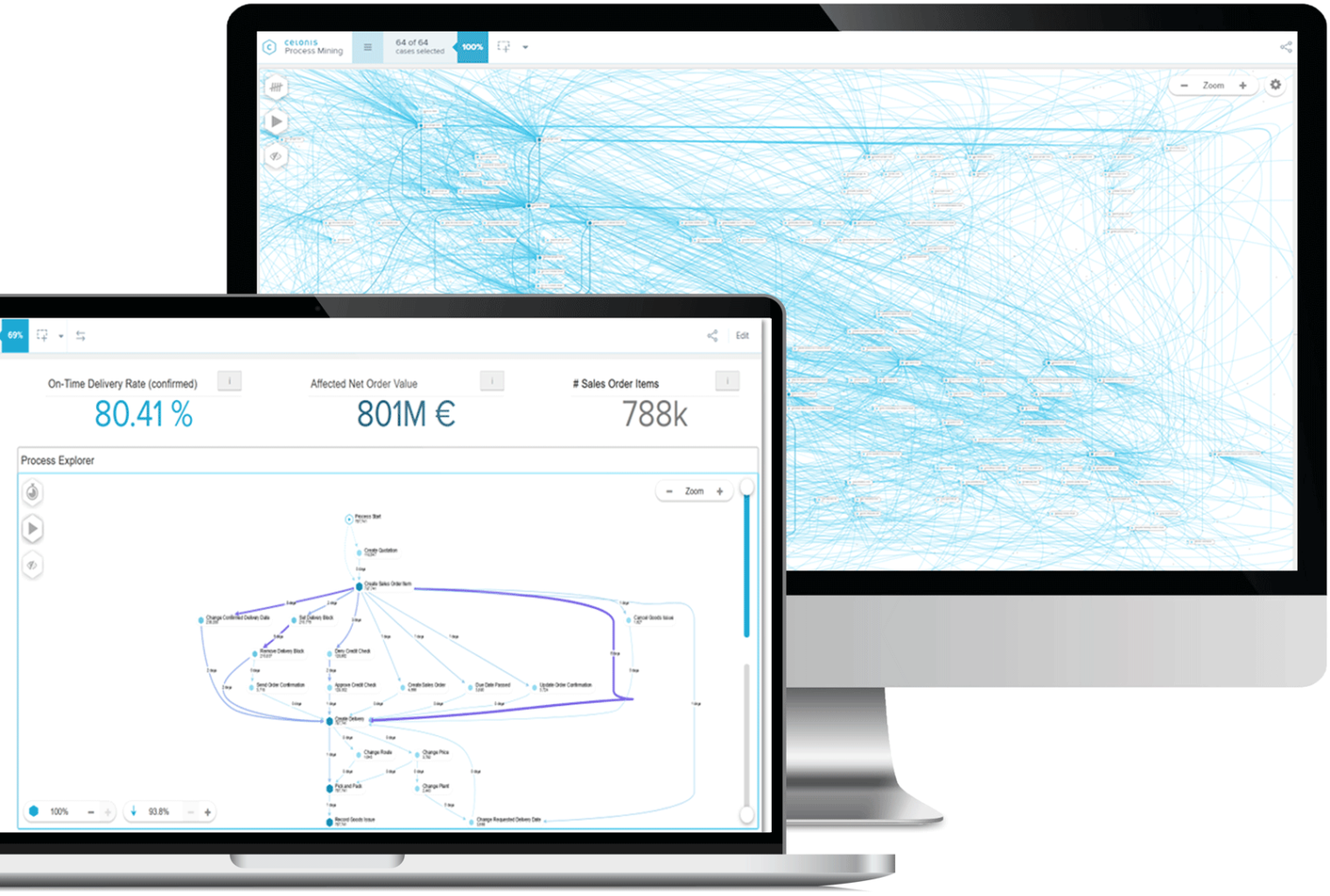
What is the current status of a specific order that is in production? What delays in the production process could be resolved? Many companies struggle with the fact that such questions cannot be answered immediately and that there is a lack of transparency in their processes.
Such information gaps—for example, regarding wait times and delivery times—can regularly lead to increased costs, delayed customer deliveries, and other processes coming to a standstill. In contrast, greater transparency enables more flexible responses, leads to more satisfied customers, and facilitates predictive maintenance, for example, so that unplanned disruptions occur less frequently overall. In other words: Instead of reactively putting out fires, you’ll be able to proactively and preventively identify areas for improvement and risks before they arise.
However, the goal of process transparency can only be achieved with a data strategy tailored to your needs. We bring experience from a wide range of companies and processes to the table and work with you to determine which data needs to be collected, to what extent, and at which points, so that you can gain a clear picture of what is happening in your factory. With automated, personalized dashboards and reports, you’ll always maintain a clear overview; communication concepts such as shop floor management ensure that all employees can use the collected information productively to improve their work.
Our goal is to create a presentation in which the key data is immediately visible and understandable to everyone involved. With this process transparency, they are excellently prepared for the challenges of Industry 4.0. It enables in-depth analysis through process mining, as well as detailed planning and control using a Manufacturing Execution System (MES), and even the automation of decisions.
Our Service Packages:
- Develop and implement a data strategy for your operations
- Create dashboards and communication strategies based on real-time business data
- Conduct a value stream analysis and design
- Identify risks and areas for improvement
Benefits for you:
- Structured, meaningful live data
- Clear communication and presentation of data and findings
- Transparent, data-driven insights into your processes
- Early identification of risks and opportunities
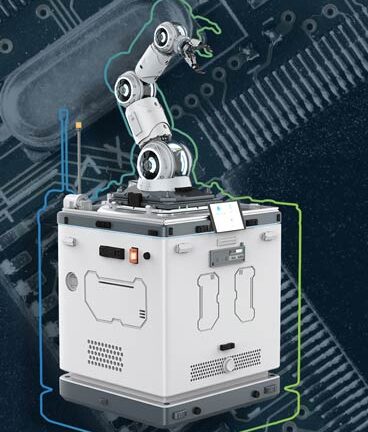
Automation
Automation is not an end in itself
High process reliability, streamlined workflows, and reduced staffing needs amid a severe shortage of skilled workers: there are many good reasons to adopt industrial automation. If it can be implemented in a way that maintains high product quality, it allows companies to meet high customer expectations while still reducing labor costs.
Nevertheless, it is important to carefully assess where automation makes sense and how far it should go. Fully automated processes can also mean that you have less flexibility under certain circumstances—and that should, of course, be avoided. Working closely with you, we determine the optimal balance between automation and manual intervention for your needs—so you can deploy your skilled employees where they’re needed most! The end result should be a strategically oriented automation roadmap that ensures you’re well-prepared for the future.
To do this, we first conduct a comprehensive analysis of your current manual processes. For those tasks where we identify room for improvement, we work with your employees to develop technological solutions. We then conduct a benefit analysis to compare the potential automation measures with manual work from both technical and economic perspectives and, based on this, define an optimal target process. Our goal: optimal collaboration between people and machines. To achieve this, we guide you through the entire project phase and implementation so that the machines are seamlessly integrated into your process workflows. We are also happy to assist you in optimizing processes for existing systems.
Our Service Packages:
- Assess the potential for automation along the process chain
- Develop vendor-neutral automation concepts
- Evaluate technical and economic alternatives and define optimal target processes
- Integrate systems into the overall value stream
- Develop a strategic automation roadmap
- Optimize existing systems and processes
Benefits for you:
- The optimal level of automation tailored to your production and logistics needs
- More efficient use of staff through the automation of repetitive tasks
- Increasing the appeal of the workplace
- Reduce costs while improving quality
- Competitive Advantage Through Technological Leadership
- Strategic focus on future developments

Technology Portfolio
A clear view of your technologies
Do you know exactly which technologies are being used in the various departments of your company? Keeping track of this is a major challenge that few companies are able to meet. What is the maintenance status of the various machines?
The problem is this: Without a clear overview of your machinery, you lack a truly solid foundation for making important decisions: Which repairs and new purchases are necessary? Which technologies might be outdated? With our proven technology portfolio management concepts, we help you create transparency. Together with your experts, we develop an overview of the machines and systems in use and supplement this in a structured manner with information on procurement, maintenance, technology, and HSSE (Health, Safety, Security & Environment).
This provides you with an overview of the current situation and allows you to align your portfolio with the latest technological developments and make forward-looking assessments. Based on this, we will work with you to identify areas where it makes sense to make investments.
Our Service Packages:
- Build a suitable technology portfolio
- Evaluating existing technologies with an eye toward the future
- Analyzing technological maturity and future viability
- Compare technologies with the state of the art
- Develop decision-making tools
- Derive recommendations for investment decisions
Benefits for you:
- Transparency regarding the technologies used within the company
- Improved efficiency across all core areas
- A clear assessment of our own technologies in comparison with the latest developments
- A solid foundation for forward-looking investment decisions
Simulation
Create a transparent basis for decision-making
Companies are constantly faced with forward-looking decisions whose consequences can quickly become highly complex. Customer expectations are rising, cost pressures are mounting—and on top of that, dynamic external and internal factors must be taken into account before any action is taken. Naturally, operational processes should be disrupted or interrupted as little as possible by these changes. The complex interdependencies in your production facilities are very difficult to keep track of in the abstract—this is where digital simulations can help by realistically modeling the effects of specific decisions in advance.
Using innovative software such as PlantSim or Anylogic, we are happy to help you overcome these challenges. Simulating individual areas or the entire process chain makes it possible to cost-effectively create an objective, well-founded basis for planning and decision-making without having to interfere with the ongoing, real-world system.
This allows you to identify potential risks early on and significantly shorten planning processes. The simulation concept we develop for you is scalable to larger contexts and can therefore be used by you for further studies without requiring your employees to undergo extensive training on the systems. With these simulations, you ensure that you can respond quickly to complex challenges and make well-informed, holistic decisions when designing highly dynamic systems and networks. This approach is suitable both for greenfield planning of completely new facilities and for optimizing existing process chains.
Our Service Packages:
- Analyze the initial situation
- Define the problem in concrete terms
- Identify relevant factors
- Define the scenarios to be examined
- Perform simulations using state-of-the-art software
- Evaluate and interpret results
- Derive recommendations for action and apply them to the real-world business environment
- Optimize material flow, resource utilization, and supply chains at all levels
Benefits for you:
- A reliable basis for decision-making without disrupting ongoing operations
- Early identification of bottlenecks, optimal capacity, and underutilization
- Reduced planning and investment risks
- Faster and more informed decision-making processes
- Greater cost-effectiveness through optimized system design
- Scalable simulation concept for further studies
FAQ
How can production processes be made more efficient?
By analyzing the entire process chain, it is possible to identify wait times, interface issues, unnecessary inventory, and other weaknesses. Building on this, manufacturing and assembly processes can be specifically harmonized and optimized.
How can production processes be made more transparent?
A suitable data strategy lays the foundation for greater process transparency. Through the targeted collection of relevant production data, automated dashboards, and appropriate communication strategies, workflows, delays, and opportunities for improvement become apparent.
How can predictive maintenance reduce unplanned production downtime?
By analyzing machine and operational data, signs of impending malfunctions can be detected early on. This allows maintenance measures to be planned more effectively and helps reduce unplanned downtime.
How can bottlenecks and unused capacity in production be identified?
By analyzing process data, value streams, and resource utilization, it is possible to identify bottlenecks, wait times, and underutilization. Depending on the specific issue, process mining, dashboards, or simulations can also be used.