
System transformation with process mining
In today's world, companies have to keep up with the times and constantly optimize themselves…
BLOG
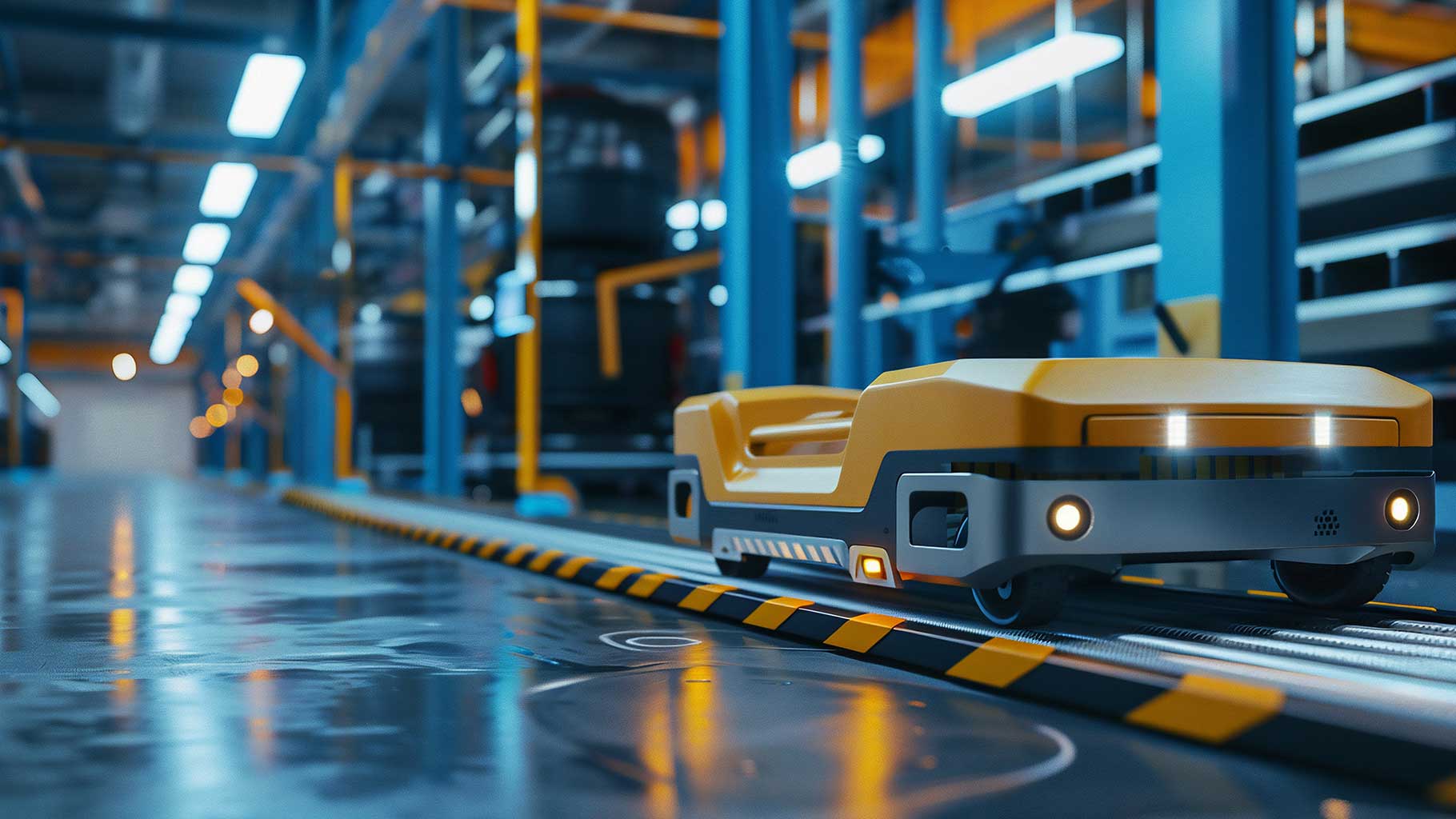
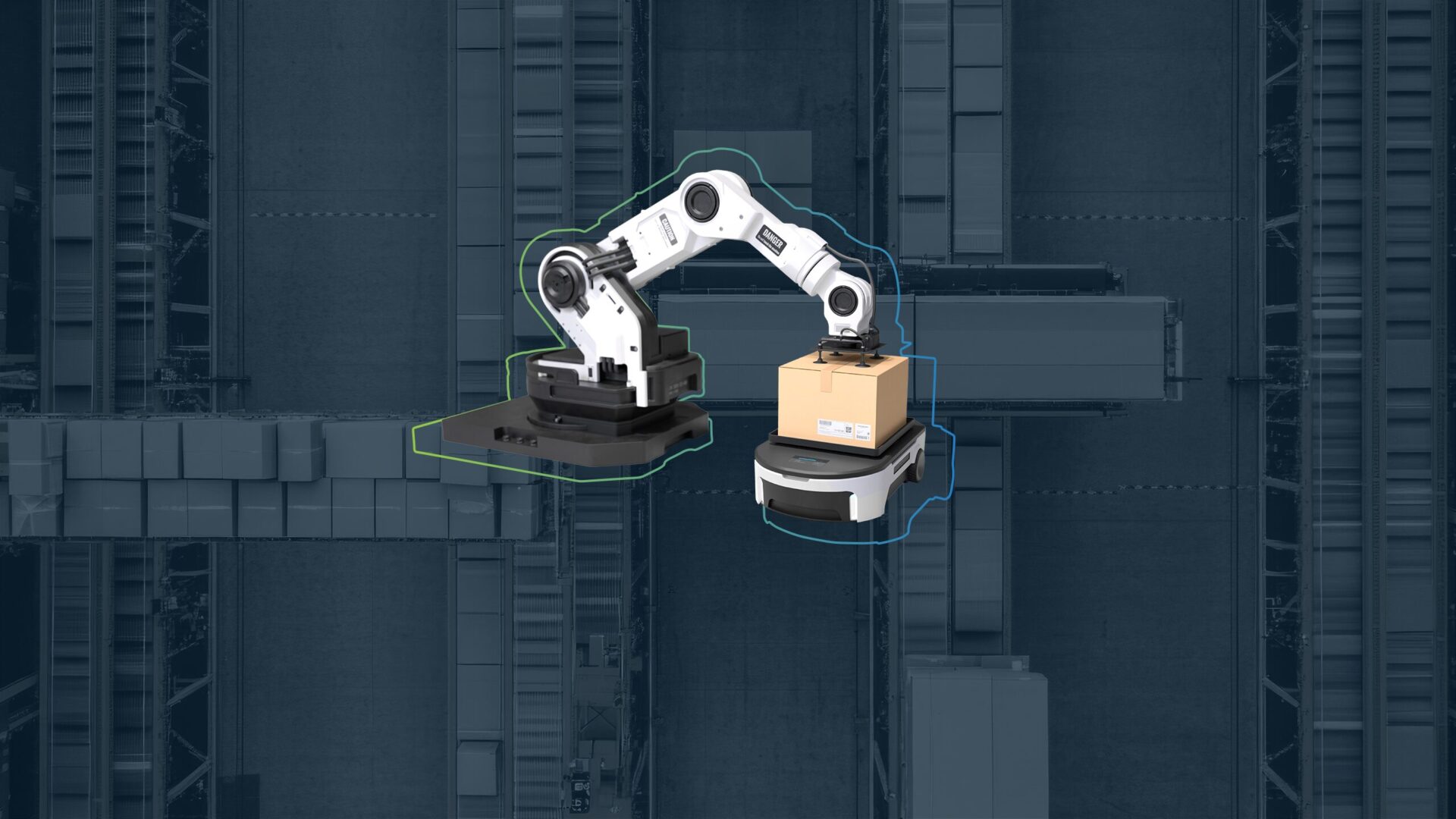
The idea is tempting: switch off the lights, goods move from A to B as if by magic using automated guided vehicles, robots and automated processes. Achieving this goal will give you a clear competitive advantage. But it’s not as easy as it sounds. It is important to first imagine what a dark warehouse would look like in the ideal world and only then transfer it to the real world – in other words, to check what is feasible, what resources are available and how far automation can actually be taken.
Many companies are facing a major challenge: qualified personnel for warehousing and logistics are becoming increasingly difficult to find. High staff turnover, a shortage of skilled workers and increasing demands on process reliability and quality are commonplace in many warehouses. According to IAB statistics, there were over 60,000 vacancies in warehouse logistics in 2025, and around 43% of German companies state that they have considerable difficulties in recruiting, which further increases the pressure on the industry. Looking just a few years into the future, this situation becomes even more challenging. In view of this situation, automation in warehouses is increasingly coming into focus – as the key to making processes more efficient and reducing the workload of employees.
Automation is no longer a topic for the future – it is already a reality. According to a study by MIT and Mecalux, 60% of warehouses worldwide use AI or automated systems, and around half of companies have automated at least 50% of their processes. At the same time, around 75% of logistics companies are planning further investments in robotic solutions to increase efficiency and competitiveness. The dream of a dark warehouse is therefore realistic if it is implemented strategically and step by step. However, not every solution is suitable for every company. The key question is: which automation solutions make sense and are cost-effective for your warehouse – and how can you get the most out of targeted investments?
The path to a dark warehouse requires more than just technology – it needs a clear strategy, a clear goal and tailor-made solutions for your company. It’s a marathon, not a sprint: only those who proceed step by step will achieve efficiency and automation at the highest level in the long term.
Phillip Carl, Senior Manager
A dark warehouse is planned in two overarching phases: Analysis phase and Implementation phase, each of which contains several steps.
Involve employees
The transformation to a dark warehouse is a journey, not a sprint. Long-serving employees are valuable sources of expertise. If they are not involved, this can lead to resistance or loss of staff. Through active involvement and further training, employees can take on new tasks and grow with the change.
Check robustness
A dark warehouse must be resistant to disruption. What happens in the event of a power failure, IT problems or sudden supply bottlenecks? These scenarios must be included in the planning right from the start in order to avoid lengthy downtimes.
Stay realistic
Not every process can be automated immediately. Different product sizes, materials or task complexity require graduated automation. Nevertheless, you should try to achieve maximum automation with the available budget. And even if not everything is possible today, automation can be expanded in the future as soon as resources or technologies become available.
Companies planning the move to automated warehouses today are not only securing a competitive advantage, but are also arming themselves against the growing shortage of skilled workers. A well-thought-out master plan that takes robustness, realism and employee integration into account is the key to turning the vision of a dark warehouse into a sustainable reality. In this way, development remains flexible: further automation can be added later if required, when more resources or new technologies are available.
A dark warehouse offers companies a competitive advantage through automation and efficient processes. Getting there requires strategic planning: first sketch out the ideal world, then realistically examine which solutions can be implemented and create a roadmap. The maximum amount of automation should be implemented within the available budget, while involving employees and considering the overall process chain. In this way, the system remains robust, future-proof and flexible for later expansions when more resources or new technologies become available.
If you want to make your logistics processes more efficient and automate them, our experts will support you with practical advice and customized solutions.

Senior Manager, Munich
The industrial engineering graduate advises his clients on issues relating to warehouse and logistics planning and the digitalization of logistics (particularly in the ERP, WMS and TMS environment). He also provides clients with comprehensive support in the areas of operations management and strategy.



Senior Consultant, Munich
Nikolai Ruof is a trained industrial mechanic, graduate mechanical engineer and senior consultant at the Rothbaum Office in Munich. His areas of expertise include warehouse planning, factory planning and value stream mapping.
In today's world, companies have to keep up with the times and constantly optimize themselves…
From manual to automated storage systems - this article shows how modern storage solutions increase…
How attractive is Eastern Europe as a production location in 2025? Find out everything you…
You need to load content from reCAPTCHA to submit the form. Please note that doing so will share data with third-party providers.
More InformationYou are currently viewing a placeholder content from Turnstile. To access the actual content, click the button below. Please note that doing so will share data with third-party providers.
More InformationYou are currently viewing a placeholder content from Facebook. To access the actual content, click the button below. Please note that doing so will share data with third-party providers.
More InformationYou are currently viewing a placeholder content from Instagram. To access the actual content, click the button below. Please note that doing so will share data with third-party providers.
More Information