Automated storage systems: Exotec Skypod
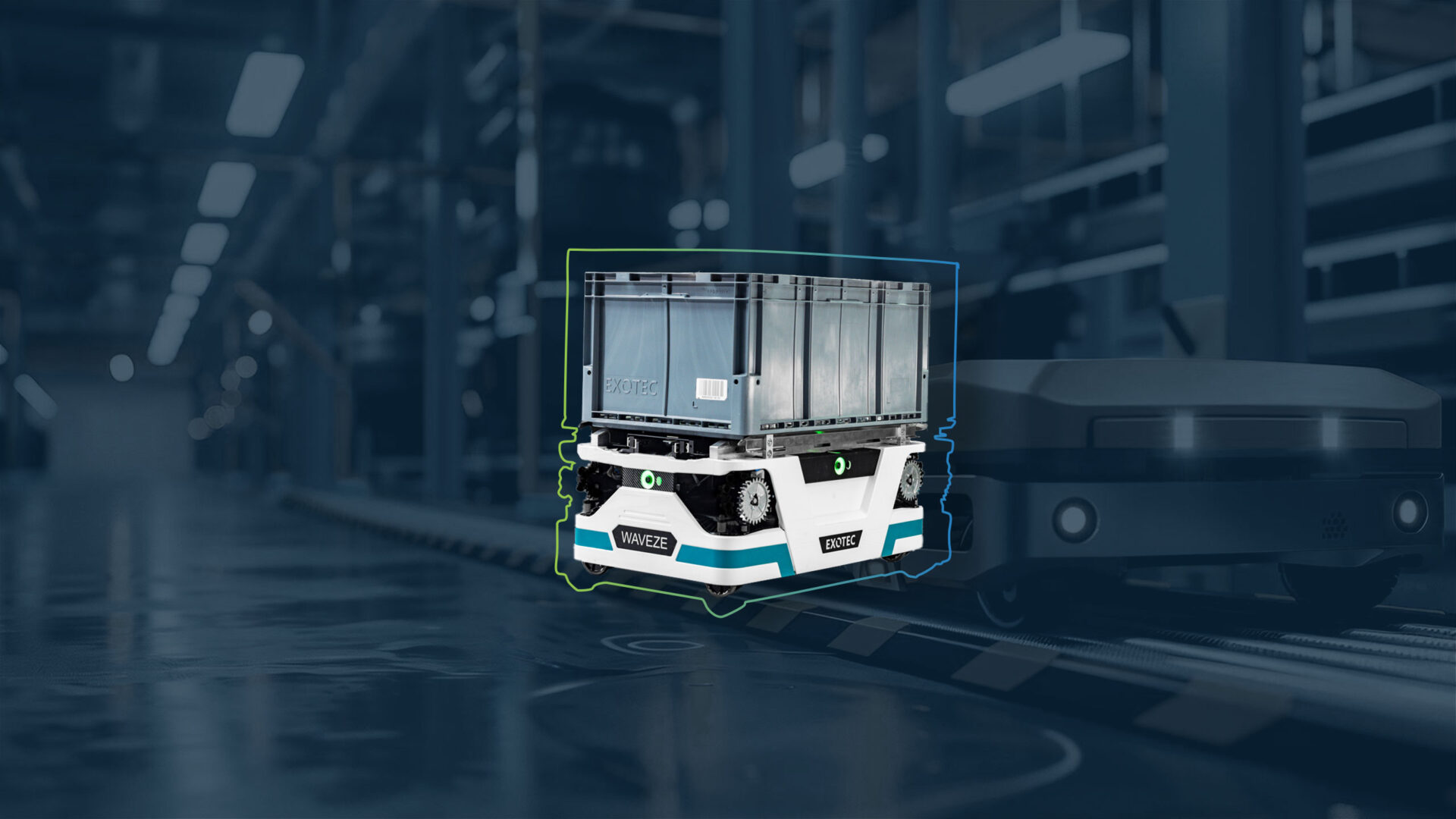
The Exotec Skypod automated storage system combines modern technology with high flexibility - for greater…
INTERVIEW SERIES GLOBAL OPERATIONS FOOTPRINT
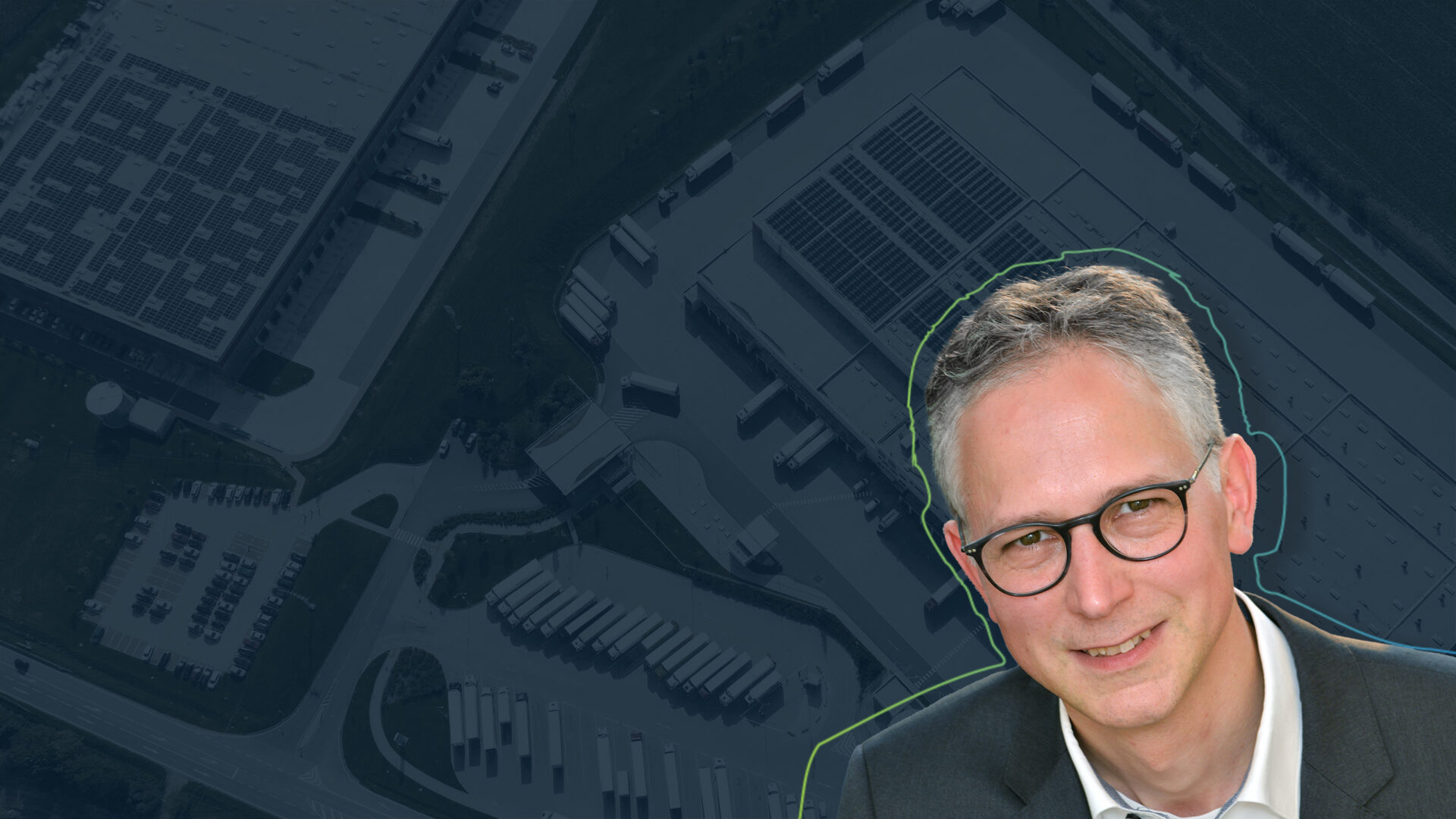
This interview with Dr. Hendrik Schellmann focuses on the strategic design of global production networks – from the development of sustainable network structures, product allocation issues and make-or-buy decisions to risk management, benchmarking and capacity management. It becomes clear that, in practice, production networks are rarely created “on a greenfield site”, but are the result of many individual decisions that grow together over time to form a complex overall structure.
The “Global Operations Footprint” interview series sheds light on the key issues surrounding international production and location structures. The focus is on the perspectives of experienced managers who share their approaches, decision-making logic and practical experience of managing global networks.

Vice President Business Excellence, Expert in the design and control of complex production systems
After completing his doctorate on flexibility in value creation networks, the mechanical and industrial engineer held various management positions in the agricultural machinery industry, most recently as Senior Director Corporate Production Systems, focusing on the development and optimization of global production networks. Since 2024, he has been employed as Vice President Business Excellence at a German DAX company.
A production network rarely grows out of a master plan, but rather from many individual decisions, such as the establishment of a location in a new market, the takeover of a competitor, or the establishment of a development department near a competence center in order to acquire know-how. At some point, however, the question arises as to how the overall structure of many locations can function efficiently. This is when overarching principles must take effect.
For me, two aspects are central to this. Firstly, clarity about the purpose of each location: Do I want to gain market access? Am I looking for specific know-how? Or is it primarily about cost leadership? These decisions are fundamental to the future profile of a plant. Secondly: clear responsibility. “Kingdoms” quickly emerge in networks. Only if it is clearly defined who is responsible for products, processes and markets – including the final decision-making authority – can a network be managed efficiently.
We have developed structured responsibility models that cover development, production, market and technology. This enabled us to avoid duplication of work and ensure that decisions are not lost in the event of conflict, but that a clear direction is given.
There is no one-size-fits-all solution, but you can derive the balance methodically. We have oriented ourselves strongly towards frameworks such as those from the ITEM at the University of St. Gallen, which are based on the product and the market. The decisive factor is which factors the customer actually rewards: Proximity to the market, price leadership or innovative strength. This determines whether a location must provide market access, know-how or cost advantages.
It is important to conduct this discussion in a structured manner – not just among experts, but with the entire management team. After all, different products have different requirements: A premium product requires proximity to development and customers, while a commodity part tends to require cost-optimized production. In the end, it helps to break down the factors and set priorities. Everything at the same time – market proximity, innovation and cost advantages – does not work. As a company, you have to decide whether you want to focus on innovation leadership, service orientation or cost leadership and consistently translate this strategy into the network.
The reality is often historical: locations develop their own profiles, sometimes as small “kingdoms”. This should be built upon, but conflicts should be systematically resolved. An efficient network needs overarching business processes and defined roles.
We have therefore introduced location preambles: These defined what a location was responsible for – and explicitly also what it was not responsible for. This helped to sharpen roles and eliminate inconsistencies. Useful profiles are lead plants, which standardize processes or products, competence centers for certain technologies or components and pure market plants, which primarily ensure customer proximity. Evolution rather than revolution is the rule here.
It is important that each location recognizes its contribution and that responsibility is clearly distributed. This is the only way to pool resources, develop standards and leverage synergies. At the same time, we must have the courage to shift or limit competencies if this is necessary for the overall optimum.
You have to have the courage to shift or restrict competencies if this is necessary for the overall optimum.
Dr. Hendrik Schellmann , expert in the design and control of complex production systems
The decision always starts at a strategic level: which product for which market, under which conditions? From there, it goes step by step into depth. Main components are first strategically positioned, subcomponents afterwards. The criteria for this are, for example, transportability, modularity and economies of scale. Thanks to a modular product kit, we were able to make a conscious decision: Assemble end products as close to the market as possible, manufacture components in competence centers or cost-optimized plants.
Transport logic was an important tool: is centralized production worthwhile or do I transport more air than added value? Such decisions could be made pragmatically using simple threshold value methods. The basic principle is that decisions are made top-down in the product structure, from main assemblies to sub-assemblies. This creates clarity and prevents getting lost in detailed discussions about individual components. Ultimately, every decision must be based on a balance of strategy, logistics and cost accounting.
It is important to narrow down the options pragmatically. Theoretically, there are countless alternatives – in practice, there are only a few realistic scenarios. We therefore sorted things out early on: Which locations have expertise? Where are risks manageable? Which suppliers are serious options? Strategic purchasing – organized according to product groups – was a key prerequisite for this.
The options were then evaluated in interdisciplinary teams – production, purchasing, logistics, often supplemented by controlling or development. This ensured that make-or-buy was not based on isolated cost comparisons, but that strategic factors such as expertise, IP protection, risk protection and logistical feasibility were taken into account. In the end, of course, there is also the cost comparison, but only after the strategic guidelines have been defined.
Three factors are decisive for me. Firstly, responsibility for the product. Where I have to guarantee function and safety, production belongs in-house – because I control the data, tests and quality myself. Secondly: Intellectual property. Anything that is technologically differentiating must not be handed over. Thirdly: core competencies. A core competence is not created by mastering a specific skill such as “welding”, but by the interaction of several corporate functions, in particular development, production and quality. Designing and welding large components in such a way that no mechanical post-processing is necessary – this is an integrated competence that creates a real competitive advantage.
There are also pragmatic criteria such as volumes and transportation logic. Large components, where more air than material is transported on the truck, are best produced locally. In-house production is therefore not a dogmatic decision, but the consistent safeguarding of responsibility, differentiation and cost-effectiveness.
Until 2019, risk was often a side issue in the footprint discussion. Corona, the chip crisis and geopolitical tensions have radically changed this. Suddenly, supply routes were blocked, plants were down or transport capacities were restricted. For us, three dimensions came to the fore: firstly, the length and vulnerability of supply chains – can I use buffers or alternative routes? Secondly, the stability of countries: Infrastructure, energy supply, political situation and currency security. Thirdly, the importance of a location in the network.
We then developed a matrix for this: On one axis, the criticality of a country; on the other, the importance of the location for sales, expertise and internal supplier relationships. The result: high-risk countries are acceptable as long as the dependency does not become too great. The key is to diversify critical nodes instead of building them up unilaterally.
A pragmatic approach is crucial. We have developed checklists that were run through for every allocation decision. Depending on volume or strategic importance, risks were examined more intensively. This resulted in a kind of ABC logic: critical components and markets require more in-depth analysis, non-critical components are run through in a simplified manner. An interdisciplinary approach is also crucial – purchasing, production and logistics must all sit at the same table. After all, risk never manifests itself in just one function. The approach remains deliberately lean but structured: Identify risks, narrow down options, evaluate scenarios. Ultimately, the aim is not to discuss the risk away, but to consciously incorporate it into the decision.
The pre-2019 era of almost frictionless global trade will not return any time soon. Too much trust has been lost. I assume that companies will act very differently in the future – depending on their risk appetite and strategy. Some will focus more on local value creation, others will consciously exploit the advantages of regions such as China or India, even if there are risks.
I don’t believe in complete deglobalization. We are more likely to see a shift: countries such as India will benefit, other regions will be left out for the time being and China will remain a strategic consideration. Companies that consciously manage risks – through second sources, backup plants or redundant processes – will have an advantage here.
It is crucial not only to identify risks, but also to strategically incorporate them into the network architecture.
Dr. Hendrik Schellmann , expert in the design and control of complex production systems
Comparisons between plants are methodologically demanding. The first prerequisite is harmonized cost accounting. Different allocations or calculation approaches make any comparison worthless. We have therefore always pushed for standardization in cost accounting. This is followed by the productivity factor: how many working hours do I need per unit of output? I can hardly see any differences within Europe today – Eastern Europe can keep up with Western Europe. In other regions, such as India, the culture is different and we have applied factors there to reflect differences in productivity or organization.
However, we have deliberately ignored minor deviations in the single-digit percentage range – differences in the double-digit range are relevant. The costs of relocation must also be taken into account. One location may seem cheaper, but if the transfer costs and the amortization period exceed three years, the relocation is often not worthwhile. In the end, every comparison remains an estimate – but with standards and clear rules, it becomes fair and reliable.
There is no perfect metric. In addition to harmonized cost rates, we have worked with top-down approaches: e.g. total costs of a plant in relation to value added or working hours. Key figures such as “euros of added value per euro of labor costs” can also provide orientation, although they are distorted by margin or market differences.
It is important to combine several perspectives and not to set a single key figure as an absolute. It is also crucial to create transparency about the definitions of all metrics – otherwise you are comparing apples with oranges. Ultimately, the key figures that are understood and accepted in interdisciplinary teams are robust. Only then can they serve as a basis for decisions.
Seasonality is a key challenge. The aim must be to stabilize production as much as possible. Standardized products are built with a largely even workload and stocks are built up where necessary, while customer-specific products must be manufactured closer to demand. Flexibility is created primarily through working time models and temporary work – in Germany, for example, through time accounts that are balanced over months. In other countries, it depends heavily on regulation and the labor market.
Synchronization in the network also plays a key role: component production can be better stabilized, while customer-specific final assembly then follows the course of the season more closely. This allows peak loads to be at least partially absorbed. Seasonality remains challenging, but it can be made manageable with clear processes, flexible working time models and stock buffers.
Flexibility is created at site level – e.g. through working time accounts, temporary work or modular production lines. However, the availability of skills is more crucial. A flexible workforce without the necessary qualifications does not help. That is why flexibility also includes targeted skills development.
Scalability is more of a long-term question: can a location double its capacity, for example, if the market demands it? To do this, I either have to make investments in advance or prepare myself so that I can do this quickly if the worst comes to the worst, e.g. by already having expansion plans in place. In practice, it’s more often about short-term adjustments, so flexibility on site is crucial.
We have also looked at this concept from time to time, but in my opinion it only works for manageable product complexity or for production lines on which exactly the same products are already being manufactured. However, this concept is often very limited by other framework conditions such as local content requirements, the target countries or the logistics costs. In the cases I have looked at so far, temporary production relocations have hardly proved successful.
Senior Manager, Hamburg
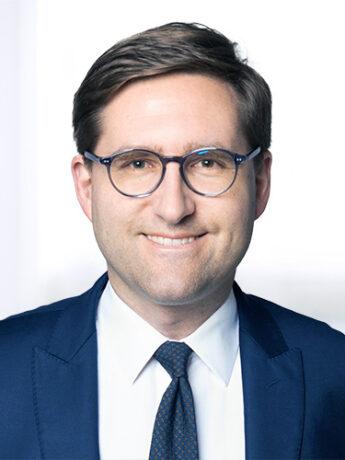
Kai Philipp Bauer studied mechanical engineering with a focus on production technology and has been working in consulting for over 15 years. He advises his clients in particular on issues relating to strategy development, operations management and digital transformation.

The Exotec Skypod automated storage system combines modern technology with high flexibility - for greater…
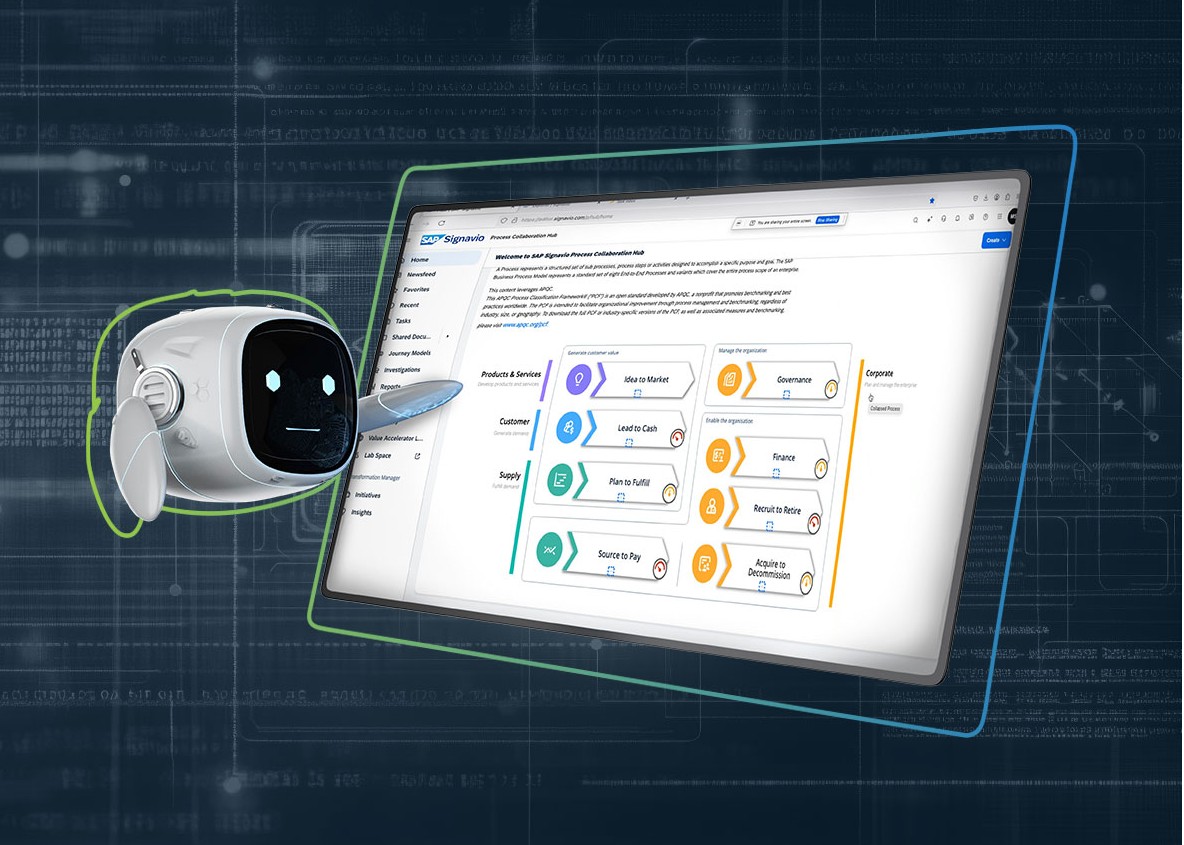
Find out how SAP Signavio helps companies to understand business processes holistically, design them efficiently…
Do you have problems ensuring your product quality? Do you have to carry out a…
You need to load content from reCAPTCHA to submit the form. Please note that doing so will share data with third-party providers.
More InformationYou are currently viewing a placeholder content from Turnstile. To access the actual content, click the button below. Please note that doing so will share data with third-party providers.
More InformationYou are currently viewing a placeholder content from Facebook. To access the actual content, click the button below. Please note that doing so will share data with third-party providers.
More InformationYou are currently viewing a placeholder content from Instagram. To access the actual content, click the button below. Please note that doing so will share data with third-party providers.
More Information