

Central goods receipt: structuring logistics processes economically
As the interface between the outside world and your company, your incoming goods department has…
INTERVIEW SERIES GLOBAL OPERATIONS FOOTPRINT
India is increasingly becoming an important building block in the global innovation network for many industrial companies. In addition to its role as a growing sales market, the country is also gaining importance as a location for research and development – particularly due to its high affinity for technology, large talent base and proximity to dynamic markets.
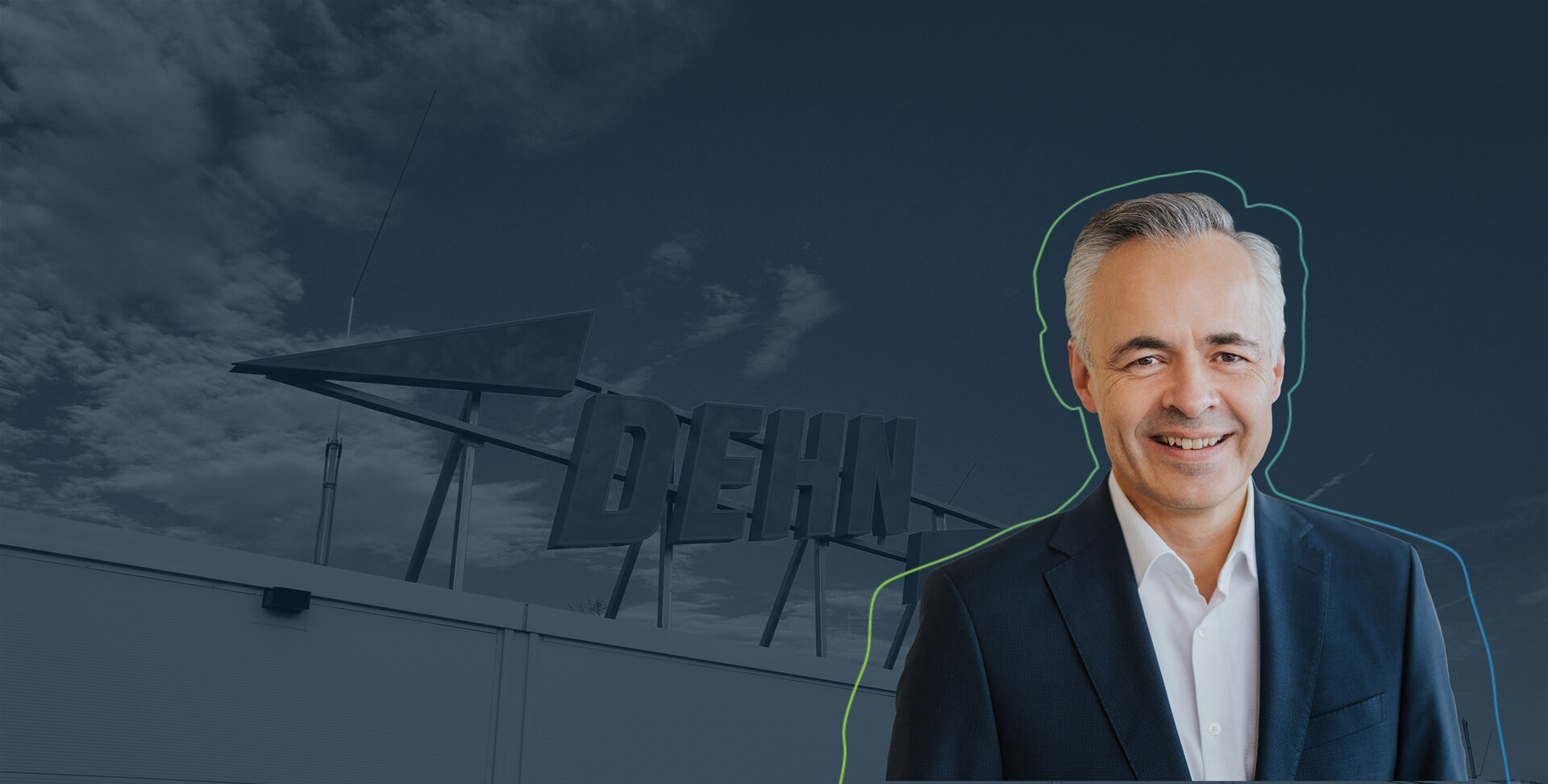
In this interview, Christian Höhler, CTO of DEHN SE, explains why the company set up a development site in India in 2020, what role it plays in the global R&D network today and what experience DEHN has gained in setting up international development structures. Among other things, he will discuss the transformation from “local for local” to “local for global”, collaboration in global teams and the strategic importance of India as an innovation and growth market.
The “Global Operations Footprint” interview series sheds light on the many facets of global networks – from location strategies and supply chain architectures to digitalization and leadership issues. The focus is on the experiences and perspectives of proven managers who provide insights into their strategic considerations and practical decision-making processes.
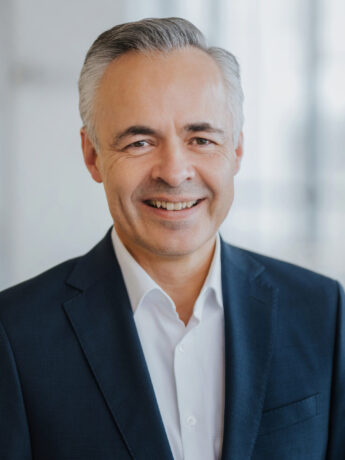
Chief Technology Officer (CTO) of DEHN SE, Neumarkt i.d. Upper Palatinate
Christian Höhler is responsible for the global technology and development strategy. One focus of his work is the internationalization of R&D activities and the establishment of new global development structures. Under his leadership, the development site in India was founded in 2020, which has developed from a “local for local” unit into a global competence center within just a few years.
We opened our development site in India in 2020. This was triggered by the strong demand for specific, locally tailored solutions. In India, there was a high affinity for digitalized products with IoT functionalities early on, while in Germany we were still more focused on classic protection solutions. “Local for local” was therefore the initial guiding principle – in other words, to develop products where customer needs arise. This was less about specific regulatory requirements in India and more about market-specific use cases and price points.
In addition to various organizational aspects, the immediate proximity to the market and the ability to quickly pick up on specific use cases and transform them into marketable products was decisive for us.
DEHN has had its own R&D presence in China for around 20 years. The difference to India lies in the strategic focus: in China, activities are strongly geared towards the local domestic market. Developments are mainly created for local needs, even if individual components are used globally. India, on the other hand, has developed on two tracks right from the start: On the one hand, we address the local market, and on the other, we are increasingly transferring global responsibility. A good example of this is our Pipeline Protection Competence Center, which is one of four centers managed from India.
This has given India a different role in our network: less locally anchored like China, but increasingly a global competence center that produces innovations for the entire Group and rolls them out internationally.
A decisive success factor was that we had a strong technical personality on site at the beginning who could act as a nucleus both professionally and organizationally and strategically. This person built up the team, integrated the right partners and built the bridge between local dynamics and global requirements.
The main stumbling blocks were in the area of processes: We underestimated how long it would take to fully implement our established standards in Germany – for example in the product development process, quality assurance or approvals. Initial projects took much longer than expected, which sometimes led to disappointment on both sides.
Today, the teams in India are closely integrated into our processes, work to the same standards as at our German headquarters in Neumarkt and have become an integral part of our global development projects.
Cooperation with universities plays a lesser role for us; the partner network of technology and component suppliers is crucial. I was particularly impressed by the great flexibility and willingness to cooperate of our partners in India. Many are prepared to develop specific components or modules together instead of just supplying standard products. One example: together with a supplier, we were able to develop a customized diode for a protection device that was both cost-efficient and powerful. This kind of openness and proximity to internal development teams is something we rarely experience in Europe.
Over the years, we have built up a stable network – particularly in the field of electronics and plastic parts – which today guarantees us speed of innovation and security of supply. It is a decisive locational advantage that we very consciously cultivate.
We started in India with “Local for Local”, today we talk about “Local for Global”. Of course, we continue to develop specific products for local requirements, such as grid analysis for apartment complexes – a solution that is particularly relevant due to the power grid situation in India. At the same time, India has developed into a global competence center in some areas. The best example is “Pipeline Protection”: originally developed from local projects to prevent corrosion on pipelines, this has evolved into a product and service portfolio that is now also used in other countries around the world.
In addition, we are particularly driving forward topics such as smartification in India. The market there is skipping entire technology generations, which means that modern IoT-based solutions are in demand earlier and more strongly than in Europe. This makes India a driver of innovation that has an impact beyond the local market.
We have established a matrix organization for this: the Indian teams report to the local management in disciplinary terms, but in technical terms to the global competence centers – mostly in Germany. In this way, we ensure that the developments fit in with the overall portfolio and that our quality and process standards are adhered to without losing our proximity to the local market.
We also use modular building block systems, for example for IoT cloud solutions. This allows local devices to address specific requirements, but their data converges globally in the same systems. This prevents isolated solutions and ensures technological coherence. We deliberately want to develop where the best use cases arise – and India is currently providing us with many points of contact that will subsequently be integrated into our global platform strategy.
We rely on a combination of cultural openness and globally binding standards. On the one hand, we consciously promote the exchange and mutual appreciation of different cultural influences. On the other hand, teams such as “Global Engineering Excellence” ensure that uniform methods, project management standards and quality guidelines apply worldwide.
This team collects best practices – whether from Germany, China or India – and integrates them into globally applicable standards. In this way, we create a common framework that provides orientation and security without suppressing local characteristics. Our teams feel respected as a result, but still work according to the same processes. In this way, we are able to consistently ensure technical excellence across national borders.
An attractive combination of international professionalism and local community spirit. As a globally active company, DEHN is a strong attraction for applicants. Culture also plays a major role: in India, work is more integrated into everyday life and community experiences – whether sports activities such as our own cricket team or social events – are very important.
Career prospects are also key: many talents want to gain international experience, prove themselves in global projects and develop further. Training courses in Germany or working in international teams are therefore highly attractive. Of course, remuneration must also be competitive. But the decisive factor remains: We offer both personal development and a community in which you can feel at home in the long term.
We make sure that cooperation is not just sporadic, but continuous. Daily coordination, regular jour fixes and video conferences create proximity and lower inhibition thresholds. We also encourage personal encounters: Colleagues spend time in Neumarkt or in India, often for several months. Such stays are valuable for both sides, because trust is built and you really understand the culture. Appreciation in everyday life is also important – we involve our international teams in decision-making processes right from the start and treat them as equal partners. The result: there is only one joint team.
For us, India is a region with outstanding growth potential. Electrification, the expansion of the energy infrastructure and digitalization have enormous momentum. We are already seeing the highest growth rates worldwide in India and South East Asia. Added to this is a young, technology-savvy population that adapts new solutions very quickly.
Of course there are challenges – such as long payment terms, which we have to address by adapting our business models. But strategically, India is one of the key markets of the future for us. The combination of size, development dynamics and demand for infrastructure and protection solutions makes the market more relevant for us than almost any other region. This is why we are investing in India both in market development and in the expansion of our local development structures.
India is increasingly becoming a springboard for other markets. Successful solutions developed there can often be easily transferred to the Middle East or the USA.
The situation within Asia is more complex: political and cultural barriers make trade with China more difficult. Made in India is difficult to sell there, and vice versa for Indian customers it is similar with Chinese products. In contrast, we see great potential for South East Asia – particularly in premium segments such as data centers or critical infrastructure, where quality and reliability take precedence over price alone. All in all, India is not just a development and sales market, but increasingly a location where global innovations are taking off.
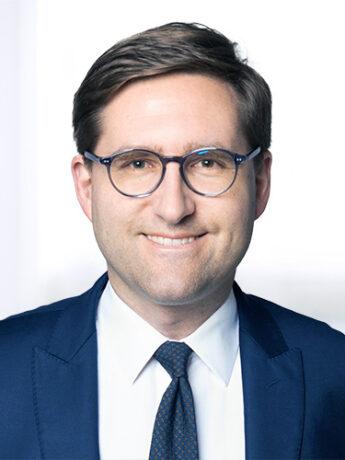
Senior Manager, Hamburg
Kai Philipp Bauer studied mechanical engineering with a focus on production technology and has been working in consulting for over 15 years. He advises his clients in particular on issues relating to strategy development, operations management and digital transformation.

As the interface between the outside world and your company, your incoming goods department has…
Which topics will shape the company's success in 2026? Discover the top topics and success…
Malgorzata Czepel on the industrial real estate market in Poland and Eastern Europe: from current…
You need to load content from reCAPTCHA to submit the form. Please note that doing so will share data with third-party providers.
More InformationYou are currently viewing a placeholder content from Turnstile. To access the actual content, click the button below. Please note that doing so will share data with third-party providers.
More InformationYou are currently viewing a placeholder content from Facebook. To access the actual content, click the button below. Please note that doing so will share data with third-party providers.
More InformationYou are currently viewing a placeholder content from Instagram. To access the actual content, click the button below. Please note that doing so will share data with third-party providers.
More Information