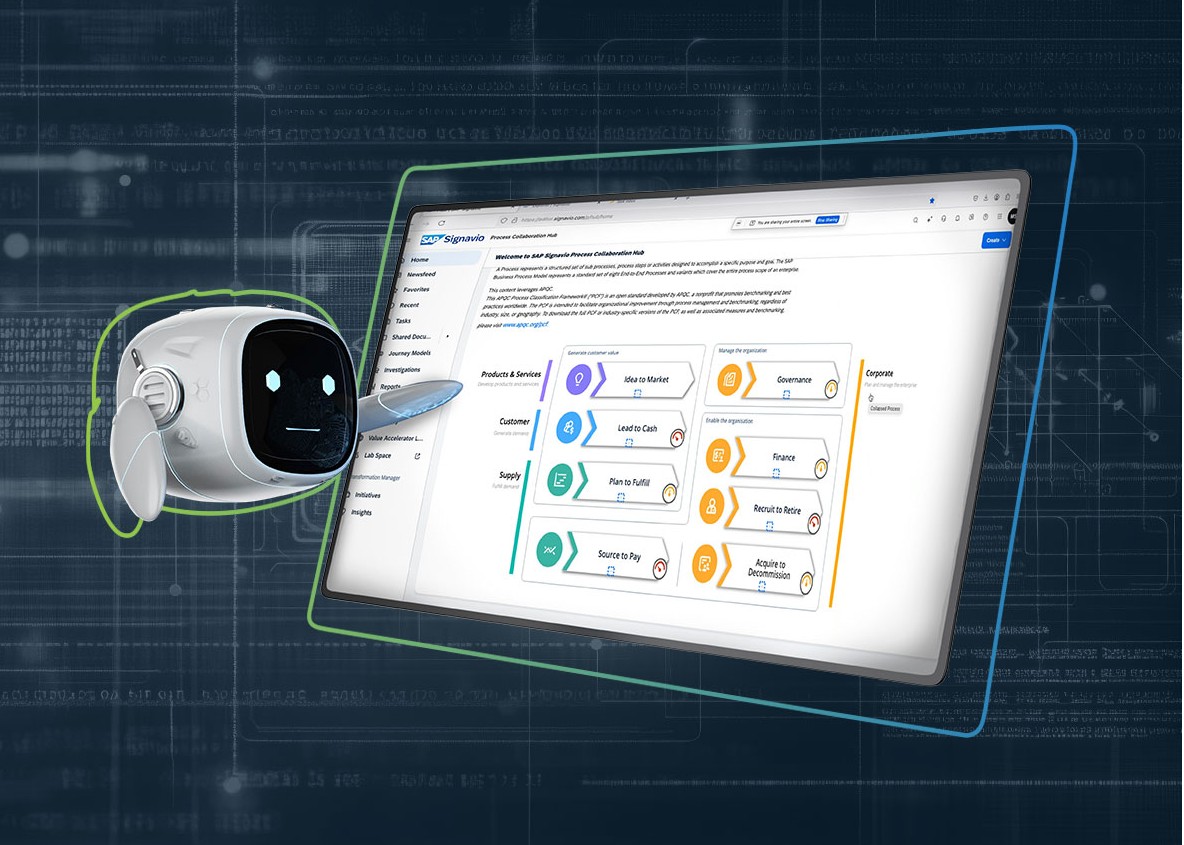
SAP Signavio: Understanding, designing and transforming business processes holistically
Find out how SAP Signavio helps companies to understand business processes holistically, design them efficiently…
INTERVIEW SERIES GLOBAL OPERATIONS FOOTPRINT
The discussion with Malgorzata Czepel will focus on the industrial real estate market in Poland and Eastern Europe: current market dynamics, regional differences, location factors for production companies, cost and subsidy structures as well as the role of sustainability and regulatory framework conditions in investment decisions.
The “Global Operations Footprint” interview series sheds light on the many facets of global networks – from location strategies and supply chain architectures to digitalization and leadership issues. The focus is on the experiences and perspectives of proven managers who provide insights into their strategic considerations and practical decision-making processes.
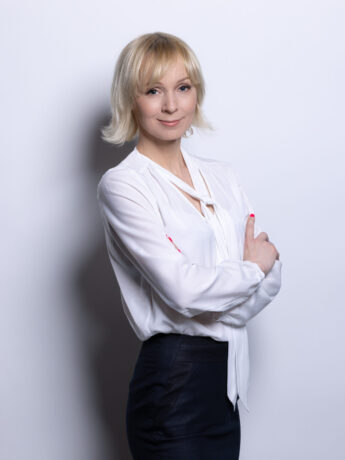
Director Industrial & Logistics at CBRE Poland,
Based in Warsaw, she leads the firm’s advisory services to international and domestic industrial and logistics companies on site selection, expansion, and land development. She has over 15 years of experience in the Polish real estate market and has supported numerous manufacturing and logistics projects in all of the country’s major industrial clusters.
After a very challenging 2024 and a sluggish first half of 2025, I see a significant improvement in the Polish industrial real estate market. The trend that started at the end of last year has clearly strengthened at the beginning of 2026. Although the statistics do not yet fully reflect this, we are receiving significantly more inquiries from potential clients. Importantly, these inquiries are not only for smaller spaces, as was the case for almost a year and a half, but also for large units of 30,000 to 40,000 square meters and in some cases even over 100,000 square meters. This indicates a renewed confidence on the part of investors.
Around 90% of these inquiries come from foreign companies from various sectors, which underlines Poland’s continuing attractiveness. I am also observing a change in behavior among project developers: After years of caution, almost 40% of new projects were launched speculatively in the fourth quarter of last year. For me, this shows that project developers are confident that demand will make up for the current vacancy rate. The recovery of the overall market may not be very fast, but I am cautiously optimistic. There are signs of stabilization and I expect more contracts to be signed in the coming months.
In my opinion, the most important driver at the moment is the need to serve European customers more efficiently. International companies, especially from China and the US, are increasingly recognizing that it is more advantageous to produce in Europe rather than ship from overseas. They save on logistics costs, shorten delivery times and stay closer to their markets. For European companies, the motivation is often cost optimization – labor costs and incentives in Poland remain attractive, although salaries have risen in recent years.
I also see strong industry trends. The automotive industry is still very active in Silesia. Renewable energies, especially wind power and its suppliers, have developed into a fast-growing cluster in northern and western Poland. Another geopolitical trend is the increasing demand from companies in the defense industry, which I believe will continue. E-commerce also plays an important role, mainly driven by Chinese companies looking for large spaces with short delivery times. Not forgetting the regions close to Ukraine, where companies are delivering goods despite the ongoing conflict. Overall, demand is driven by a mix of supply chain optimization, cost savings and industry-specific developments, making the Polish market dynamic and diverse.
Poland is clearly the leader, but in almost every project we compete with Romania, Hungary and Slovakia. Romania in particular has grown strongly and often wins projects that Poland does not receive.
I see different dynamics within Poland. The south, especially Silesia, remains a hotspot for automotive and heavy industry. The Szczecin region has developed into a very strong location, mainly thanks to Scandinavian companies in the renewable energy sector. For me, it is currently one of the absolute top markets. In eastern Poland, Lublin and the surrounding area are attracting investors with links to Ukraine, both in terms of production and logistics. In general, I always emphasize to my clients that Poland offers both established centers such as Warsaw, Upper Silesia and Wroclaw as well as promising up-and-coming regions such as Szczecin, Lublin and Bydgoszcz.
The combination of established and up-and-coming locations is a unique strength of the Polish market.
Malgorzata Czepel, Director Industrial & Logistics at CBRE Poland
In my experience, companies always evaluate several criteria at the same time. Labor costs are an important factor, but not the only one. For manufacturing companies, utilities are absolutely crucial. Without sufficient electricity, gas or water, a location is not even considered. In many cases, the availability of electricity decided whether Poland or another country was awarded the contract for a project. The approval procedures are also of crucial importance. In Poland, it takes around six months to obtain a standard environmental permit. For emissions or more complex processes, however, it can take nine to fifteen months. This is often the bottleneck. Another factor is logistics: transportation costs have risen worldwide, so proximity to suppliers and customers is becoming increasingly important. When I advise clients, I always prepare analyses that take all these factors into account. Many investors start with a preferred country, but change their mind once the analysis is complete. For me, the decisive elements are always labor, energy supply, permits and logistics – and the optimal choice results from this.
Energy and infrastructure are crucial. If a location cannot provide sufficient electricity, gas or water (depending on the type of company), it is unsuitable for heavy industry. The supply of real estate plays a different role. For light industry, the adaptation of existing space is often possible, especially as around 8% of Class A space in Poland is currently vacant. For heavy industry or very specific manufacturing processes, however, existing facilities rarely meet the requirements. In such cases, build-to-suit or build-to-own projects are the solution.
This is where I see a real strength in Poland: the project developers are experienced and flexible. They are not only active in core markets such as Warsaw or Wroclaw, but also in up-and-coming regions and sometimes even develop the first modern building in a new location if a client so wishes. This offers investors choices that may not be available to them in other countries. So while infrastructure and utilities determine feasibility, Poland’s broad real estate offering ensures flexibility and adaptability, which in practice is a strong competitive advantage.
In addition to Germany, Austria and Switzerland, I see investors from three main groups. Firstly, companies from the USA and China that want to build up production capacities in Europe. For them, Poland is a cost-efficient and well-located entry point. Secondly, Scandinavian companies, especially in the Szczecin region, where wind energy is attracting considerable investment. This is a clear trend. Thirdly, Ukrainian companies and international companies considering Eastern Poland as a location for reconstruction in Ukraine. Although these projects have not yet been finalized, I am receiving inquiries and analyses that clearly point in this direction.
In my view, this combination demonstrates Poland’s role as a bridge: We are attractive both for global corporations optimizing their supply chains and for regional players with specific market objectives. This diversity of origins makes our market resilient and dynamic.
Availability is currently relatively high. The vacancy rate for modern class A industrial buildings is around 10% in some regions, which is unusual for Poland. Property developers continue to invest in construction as they assume that these vacancies will soon be let.
Manufacturing companies are always faced with the question of whether to adapt existing space or start a new construction project. Many customers are surprised to find that adaptation is not always cheaper – especially when there is a high supply requirement. In some cases, building a new facility is more economical than redesigning an existing one. This is why build-to-suit is still very popular. I always carry out detailed comparisons with my customers to ensure that they choose the technically and financially optimal solution. Thanks to the size of our market, we can offer flexibility: Space in established industrial centers or completely new projects in emerging regions. Overall, I rate availability as good and the competition among developers has a positive effect on investors.
Construction costs rose significantly after the outbreak of the war in Ukraine, mainly due to higher material and energy prices. However, prices have stabilized since then, giving investors planning security and keeping them below Western European levels. Rental prices also jumped in 2022, but now I see stability with attractive levels in many regions due to the current vacancy rate. Of course, rents vary greatly depending on the location. In Warsaw or Krakow, land is expensive and supply is limited, which is why prices are higher. In less saturated regions, effective rents remain at around EUR 3 per square meter (depending on size and rental period).
This flexibility makes Poland very competitive compared to Western Europe. In Germany, the Netherlands or France, investors have to pay significantly higher rents for comparable quality. Polish project developers are now also more willing to negotiate and offer flexible rental conditions and incentives.
In my view, the cost structure of commercial real estate is still one of the strongest arguments for investors in Poland.
Malgorzata Czepel, Director Industrial & Logistics at CBRE Poland
I have noticed that most production companies still prefer long-term rental contracts. German companies often consider buying first, as this is a tradition in their home country. In practice, however, most of them change their minds as soon as they recognize the professionalism of Polish project developers. They take responsibility for planning and approval. Planning, financing and construction. They deliver a turnkey solution and bear the risk so that the customer can concentrate on their core business.
At CBRE, we only had a few inquiries for build-to-own projects last year, and only one company actually built independently. This client already owned several complex factories in Europe and had its own real estate team. The vast majority prefer leasing. For me, the rationale is clear: buildings age, technology and standards evolve, and many companies don’t want the risk of owning obsolete facilities after 20 years. Leasing offers flexibility and reduces risk, which is why it has become the dominant model, even for German manufacturers.
The most important programs are operated by the Polish Investment and Trade Agency (PAIH) and the special economic zones. They offer tax relief on corporate income tax and other incentives. Poland is characterized not only by the level of support, but also by its implementation. Each investor is assigned a fixed contact person who explains the support criteria – such as the required investment sums or job creation – and accompanies them step by step. This makes the process predictable and transparent, which many of my clients appreciate compared to less structured systems in other countries.
There are also additional programs focusing on innovation and research & development, which are important for companies with advanced manufacturing. In my view, these incentives contribute significantly to Poland’s competitiveness. They often tip the scales in our favor when competing with countries like Romania or Hungary. It’s not just about money, but also about reliability and professional support throughout the entire process.
The two most important permits are the environmental impact assessment and the building permit. The environmental impact assessment is usually the most time-critical. For standard projects, it takes around six months, but for emissions or more complex processes, the processing time can be extended to 9-15 months. The building permit is easier to plan and should be issued within 65 days if the documentation is correct. Once completed, the occupancy permit is required before operations can commence. However, early access is often granted for the installation of equipment. Depending on the type of production, additional permits may be required, for example for water supply or complex processes. In my experience, the system is transparent, but careful planning is essential. Companies relocating their existing production need to keep a close eye on timelines, as the phased installation of machinery requires precise coordination with the approval process. My job is to support customers early on in these steps so that they avoid unexpected delays later on.
Sustainability is now standard. Virtually all new construction projects in Poland are now certified – usually with BREEAM at the “Very Good” or “Excellent” level. International companies are demanding this as part of their ESG strategies, but I am also observing a growing awareness among medium-sized companies.
Interestingly, property developers are no longer waiting for tenants to apply for certification. They have made it standard because they know that a building without sustainability is not competitive. In practice, this means that new construction projects are being equipped with photovoltaic roofs, charging stations for electric vehicles, LED lighting and gray water systems. Biodiversity-promoting measures such as green spaces or even beehives are common. These measures are not only good for the environment, but also reduce operating costs, for example through energy-efficient heating. Owners of older buildings are also investing in refurbishments in order to remain competitive.
For me, sustainability is no longer an option in Poland. It is an integral part of the way today’s commercial real estate market works.
Malgorzata Czepel, Director Industrial & Logistics at CBRE Poland
I see that property developers are continuously raising their standards. Measures such as decoating fans to optimize heating, photovoltaic-compatible roofs and charging stations for electric vehicles are now standard. Some developers are going one step further and integrating heat pumps or advanced energy management systems. Although these innovations are not yet widespread, they are becoming increasingly important. Owners of older buildings are also investing in upgrades – such as insulation, modern heating, ventilation and air conditioning systems or solar panels – as they know that tenants are demanding lower energy costs and a better ESG balance. Certification has become an important benchmark: Most new buildings achieve at least a BREEAM rating of “Very Good”, some even “Excellent”. This creates competition. The trend towards greater sustainability among property developers is enormous.
In my view, this is a very positive development. It protects the environment, reduces operating costs for tenants and ensures the competitiveness of the Polish real estate market. Each new generation of projects produces better solutions, and I expect this continuous improvement process to continue.
I really enjoy working with German companies because their processes are always very well prepared. They know what they want and their questions are detailed, which makes the collaboration efficient. The most common concerns relate to the availability of labor and rising wages. Although salaries in Poland have risen, they are still competitive compared to Western Europe.
Another point is the stability of the workforce. Here I always emphasize the high work ethic of Polish employees. Once they have been trained, they tend to stay with their employer for a long time, which reduces staff turnover and training costs.
German customers also analyze approval deadlines very carefully. They want predictability and we provide them with realistic timelines from the outset. Incentives are another common theme: companies want to understand the process and how PAIH and the Special Economic Zones can support them. In summary, their concerns are pragmatic and can be resolved with data, references and transparency.
My advice is: Firstly, consult professional advisors at an early stage. The Polish market offers many opportunities, but each production profile requires specific solutions in terms of energy supply, support programs and workforce. An early analysis helps to avoid costly delays.
Secondly, I recommend being open to the solutions offered by project developers. While ownership is common in Germany, leasing via a build-to-suit project in Poland is often faster, safer and more flexible. It shifts the risk to the project developer and ensures that the building meets modern standards.
Thirdly, I advise German companies to examine the funding opportunities in Poland. In combination with other market conditions, this can make Poland more attractive than competing countries. PAIH and the Special Economic Zones offer transparent and reliable advice in the promotion process, which many investors underestimate. Finally, I would like to emphasize that Poland combines cost advantages with a loyal and skilled workforce. For me, it is one of the best options for German medium-sized manufacturers looking to expand internationally. With the right preparation, entering the Polish market can be a very successful step.
Senior Manager, Hamburg
Kai Philipp Bauer has been working in consulting for over 15 years. He advises his clients primarily on strategy development, operations management, and digital transformation.

Find out how SAP Signavio helps companies to understand business processes holistically, design them efficiently…
Which cost-cutting programs can manufacturing companies use to become even more efficient and competitive? We…
Many German companies are pursuing a "local for local" strategy and setting up production facilities…
You need to load content from reCAPTCHA to submit the form. Please note that doing so will share data with third-party providers.
More InformationYou are currently viewing a placeholder content from Turnstile. To access the actual content, click the button below. Please note that doing so will share data with third-party providers.
More InformationYou are currently viewing a placeholder content from Facebook. To access the actual content, click the button below. Please note that doing so will share data with third-party providers.
More InformationYou are currently viewing a placeholder content from Instagram. To access the actual content, click the button below. Please note that doing so will share data with third-party providers.
More InformationYou are currently viewing a placeholder content from reCAPTCHA. To access the actual content, click the button below. Please note that doing so will share data with third-party providers.
More Information