Driverless and autonomous transportation systems
Automated guided vehicles (AGVs) have been on the market for many years. Many companies now…
BLOG series Automated storage systems
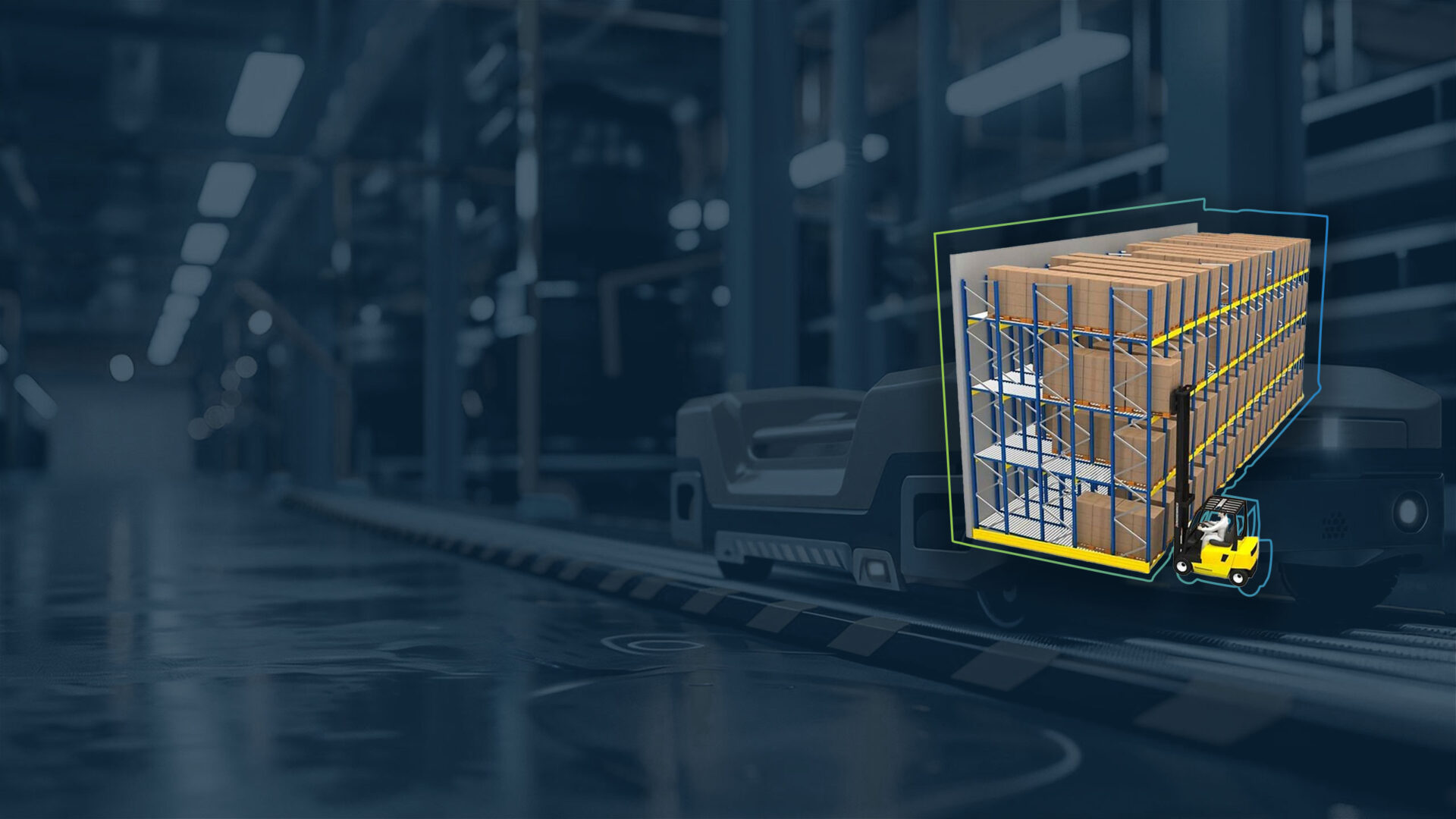
This article in the Automated Storage Systems blog series is dedicated to the use of automated push-back racking in combination with pallet shuttles. What are the advantages and what special requirements need to be considered? In our previous articles on automated pallet storage systems, we looked in detail at the variants with storage and retrieval machines and shuttle systems. The automated narrow-aisle warehouse is a suitable alternative for low to medium performance requirements as well as high compaction and low investment costs. Building on this, we now show how automated push-back racking can be used instead to efficiently achieve a particularly high storage density.
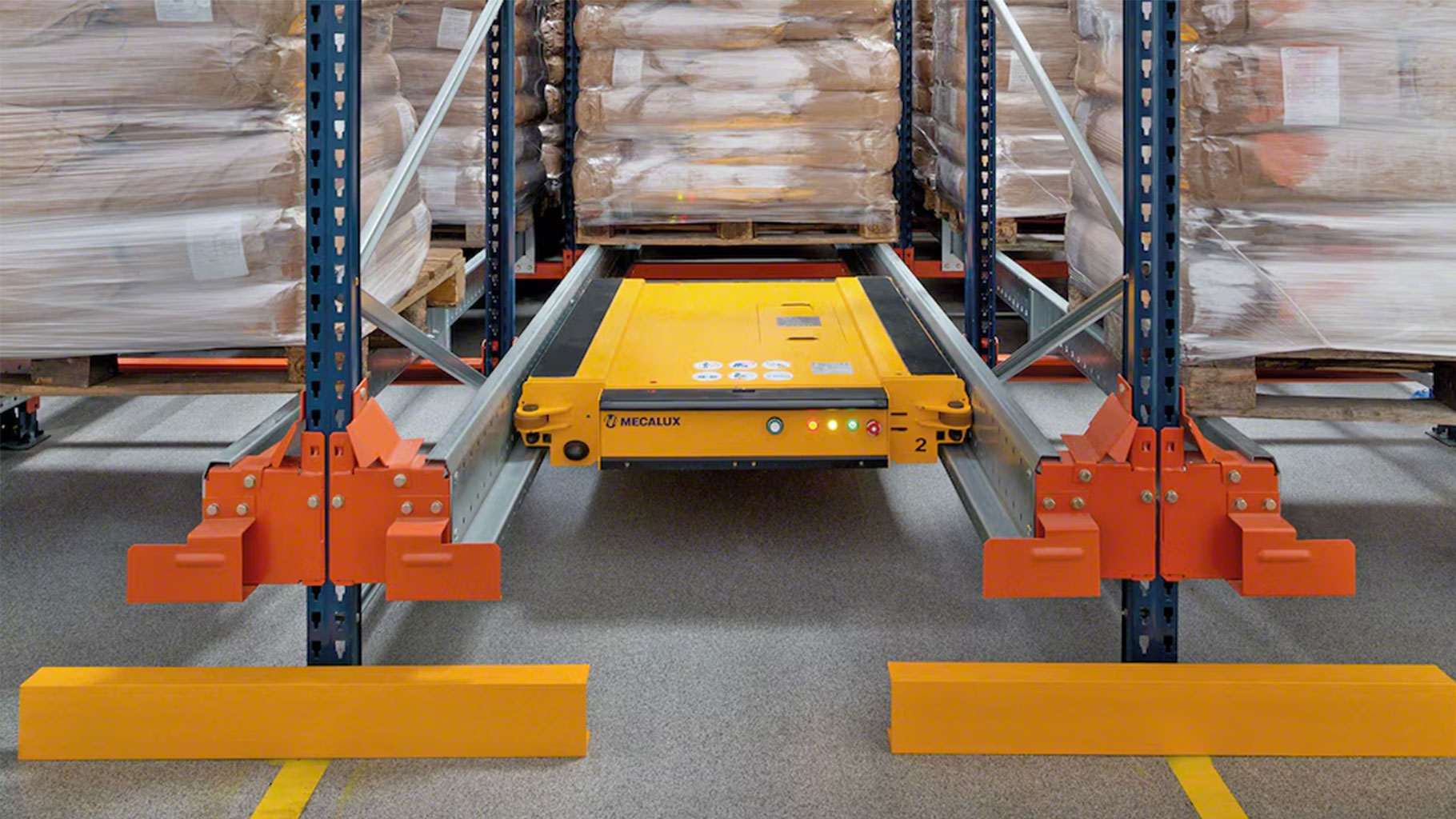
Push-back racking with pallet shuttle is an automated solution for the compact storage of pallets in the depth direction and works according to the FIFO or LIFO principle, depending on the system design. In contrast to manual push-back racking with inclines and roller conveyors, an electrically operated shuttle transports the pallets within a channel. The shuttle is inserted into the desired storage channel and can autonomously store and retrieve pallets there. This enables a fast and safe flow of goods. The system is particularly suitable for warehouses with high throughput, a low variety of types per channel and a high degree of automation, e.g. in the food, beverage or frozen food industries. The compact storage structure makes optimum use of storage space and storage volume, which is particularly advantageous for expensive warehouse space. The system also reduces the need for forklift traffic in the aisles, which increases both safety and efficiency. Push-back racking with pallet shuttles offers a good balance between storage density and automation and is ideal for companies with medium to high stock turnover.

Senior Manager Logistics
Are you looking for a suitable automated storage system and need support? Send me your message and I will get back to you as soon as possible.
In this storage system, the racks consist of channels in which the pallets are stored one behind the other on roller conveyors. An electrically operated pallet shuttle enters the channels autonomously, transports the pallets to the desired position and places them there. The shuttles usually work according to the FIFO or LIFO principle, depending on the storage strategy. Loading and unloading takes place via transfer points at the rack entrance, where the shuttle is supplied with pallets by a forklift truck or an automated system. The system enables a high storage density as no aisles are required between the rows of racks. Pallet shuttles can be used in push-back racking with channels up to 60m long. In addition, the use of multiple shuttles increases efficiency and significantly reduces loading and unloading times.
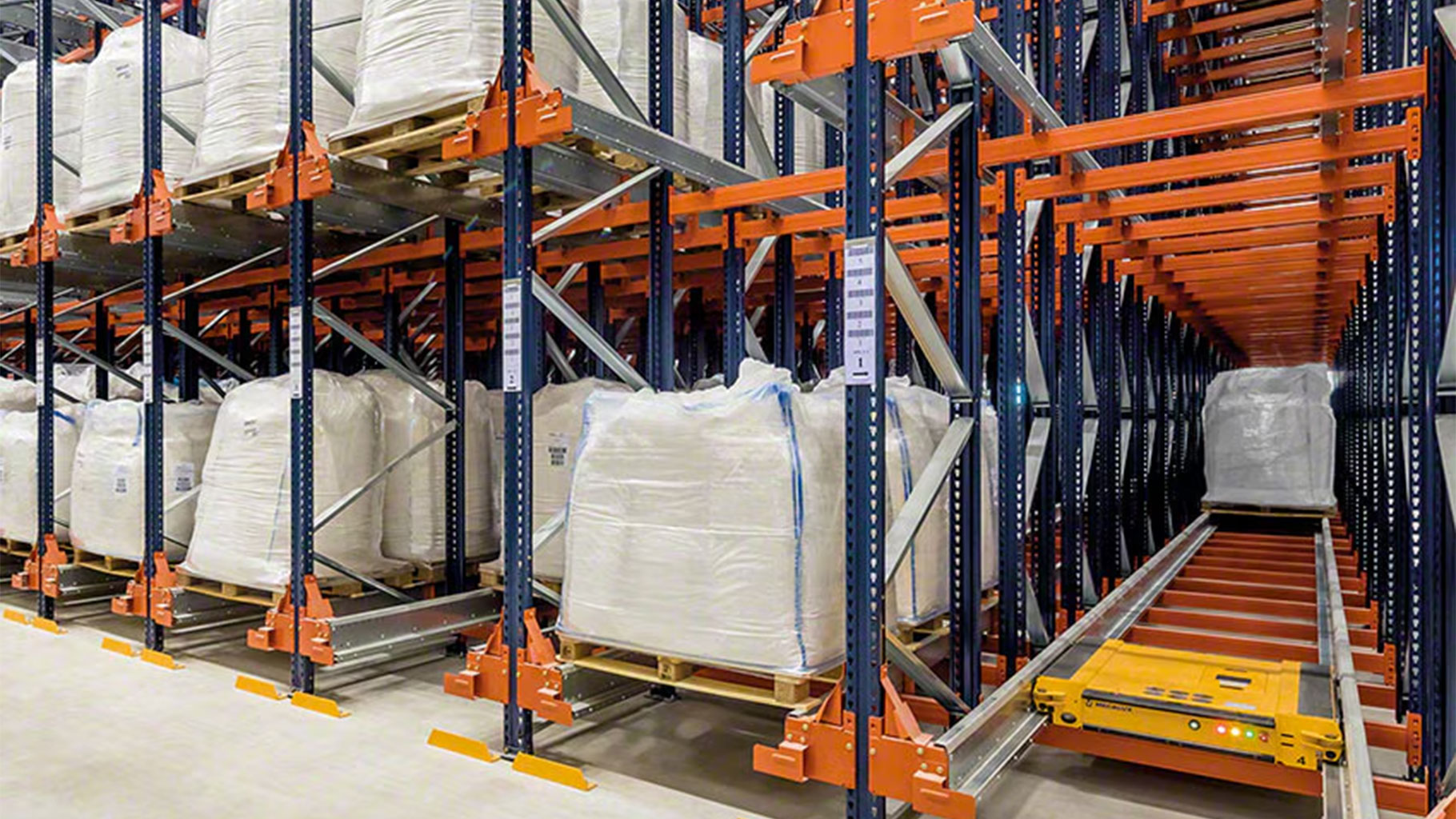
One shuttle can be used per rack channel, resulting in a higher handling capacity. Alternatively, the shuttles can also be transported between the channels by a forklift. This results in lower investment costs on the one hand, but is also associated with a reduced handling capacity.
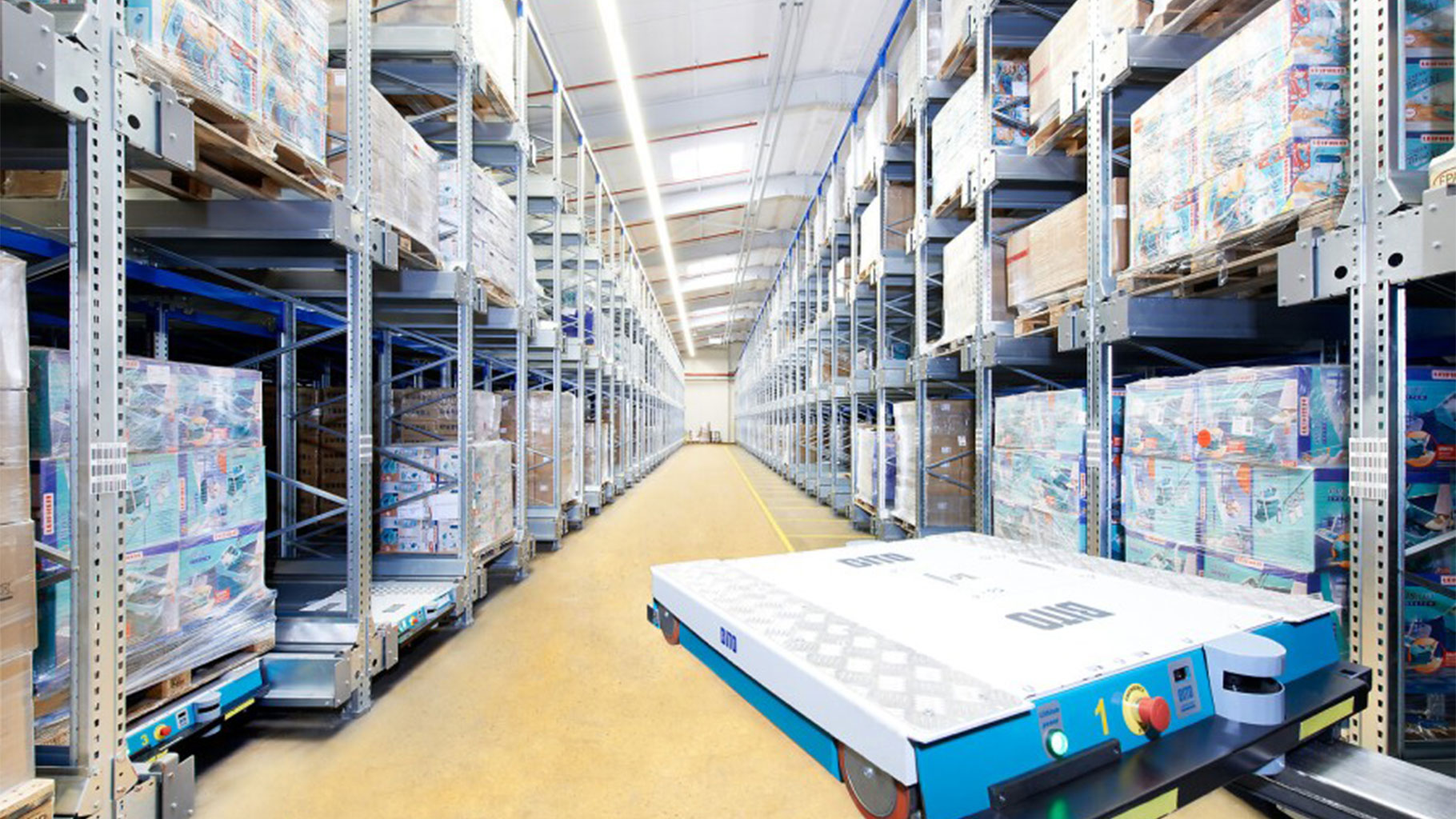
Push-back racking with a pallet shuttle offers a number of specific advantages, particularly when storing large quantities of the same items. By dispensing with aisles between the rows of racking, an extremely high storage density is achieved. The available space can be used almost entirely as storage space. However, the filling level of the warehouse depends on the range of goods stored. With single-variety channels, all channels are often occupied (100% occupancy rate) and yet the fill level is significantly lower, fluctuating utilization per shelf channel.
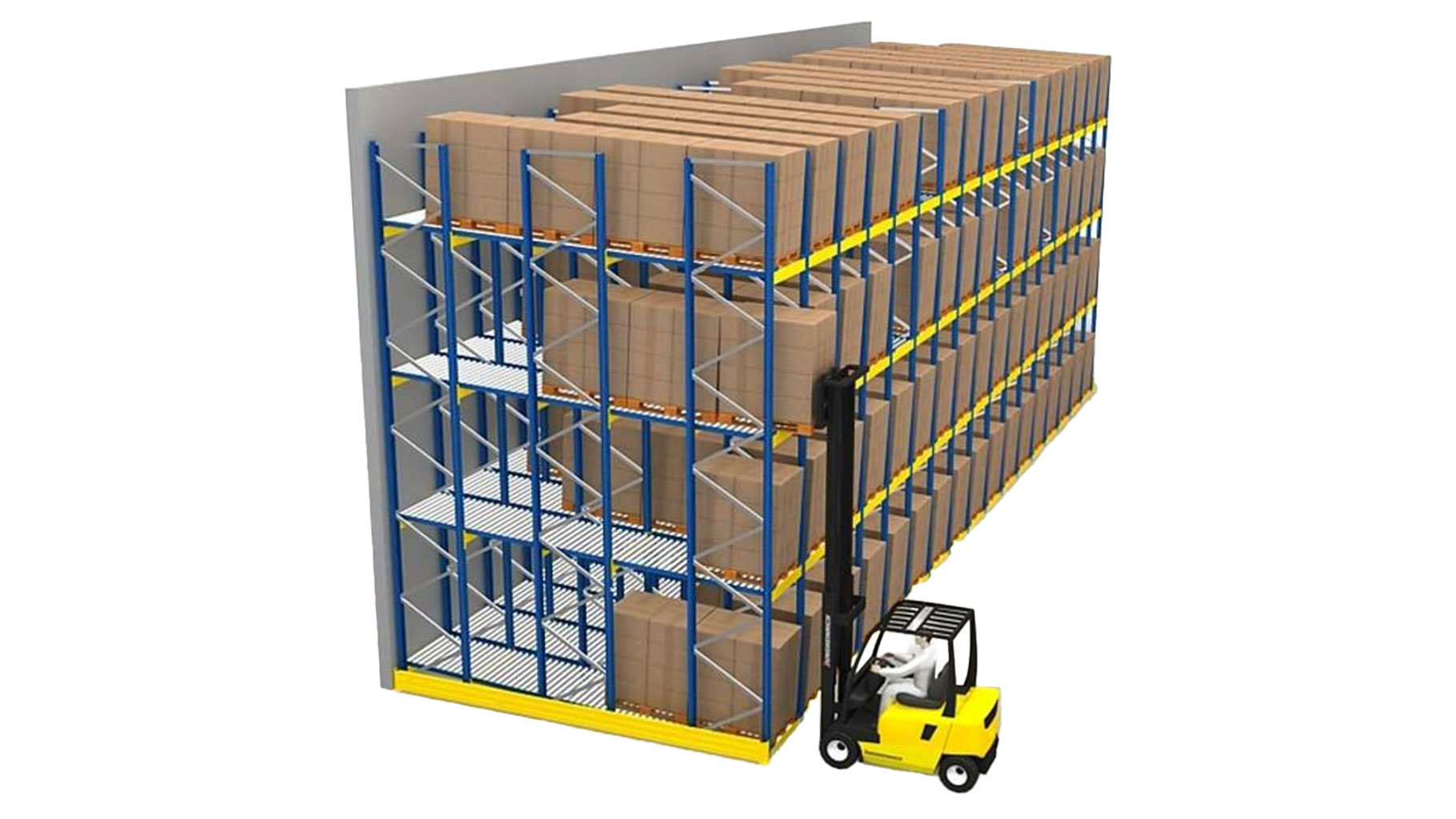
The investment costs are relatively low compared to more complex systems such as shuttle or RGB warehouses, as the racking structure is simple. Thanks to the modular shuttle technology, performance can be flexibly adapted by using or eliminating additional shuttles. Operation is energy-efficient and incurs only low operating costs, as no continuous storage and retrieval machines are required. In addition, several independent shuttles increase system availability, as operations continue in other channels if one vehicle breaks down. Overall, the system is particularly suitable for companies with high throughput and limited space.
The performance of push-back racking with pallet shuttles depends largely on the number and coordination of the shuttles used. A single pallet shuttle can move around 20 to 40 pallets per hour, depending on the system and route length. Without a load, pallet shuttle speeds of 0.8 to 1.2 m/s are possible, with a load of 0.6 to 1.0 m/s. If several shuttles are used, the overall performance can be increased accordingly, allowing flexible adaptation to the actual throughput requirements. Compared to conventional push-back racking without automation, the shuttle system offers a significantly higher handling speed. As the shuttle operates autonomously in the channels, there is no loss of time due to time-consuming manual storage and retrieval. Loading and unloading processes can be organized efficiently and in parallel, especially if several operating stations are available. This system is therefore ideal for companies with high volumes and limited space.

Manager, Hamburg
His focus is on production technology. His experience and knowledge include production management, factory planning, value stream mapping, lean management, intralogistics planning and change management.



Senior Manager, Munich
The industrial engineer advises his clients on warehouse and logistics planning, logistics digitization, and operations management and strategy.
Automated guided vehicles (AGVs) have been on the market for many years. Many companies now…
We show you the best US production locations for mechanical engineering, chemicals, automotive & high-tech.…
NoyesStorage is an innovative automated storage system that efficiently automates even the smallest spaces. It…
You need to load content from reCAPTCHA to submit the form. Please note that doing so will share data with third-party providers.
More InformationYou are currently viewing a placeholder content from Turnstile. To access the actual content, click the button below. Please note that doing so will share data with third-party providers.
More InformationYou are currently viewing a placeholder content from Facebook. To access the actual content, click the button below. Please note that doing so will share data with third-party providers.
More InformationYou are currently viewing a placeholder content from Instagram. To access the actual content, click the button below. Please note that doing so will share data with third-party providers.
More InformationYou are currently viewing a placeholder content from reCAPTCHA. To access the actual content, click the button below. Please note that doing so will share data with third-party providers.
More Information