Ensuring product quality with the Control Plan
Do you have problems ensuring your product quality? Do you have to carry out a…

BLOG
Returns not only incur direct return shipping costs but also hidden expenses related to quality inspection, reconditioning, and administration. A process-oriented approach with clear KPIs, standardized inspection procedures, and decision criteria for resale versus disposal significantly reduces these costs. At the same time, optimized returns management can increase customer satisfaction and improve the bottom line.
Anyone who sees returns only as a problem overlooks their potential: Every return is an opportunity to improve processes, better understand customers, and make the supply chain more efficient.
Nikolai Ruof, Senior Consultant
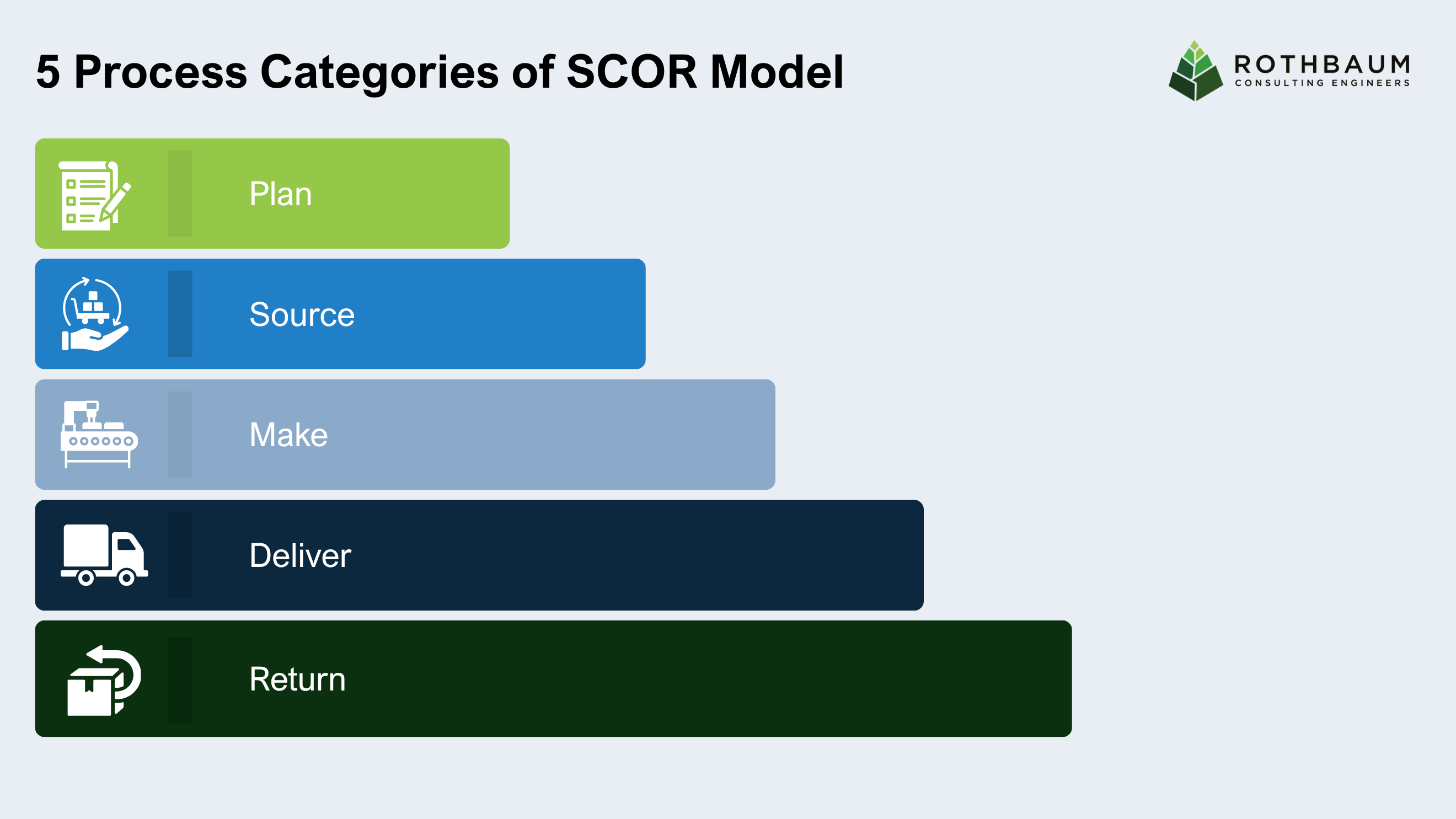
In many companies, returns are still viewed as an unavoidable cost center. Yet there is hardly any other process with as much untapped potential for optimization. Under the SCOR model (Supply Chain Operations Reference Model), business processes are divided into five main categories:
Companies typically analyze and optimize the first four steps meticulously—from planning through procurement and production to delivery to the customer. Returns, however, the fifth process, are often neglected. Many companies follow the motto “out of sight, out of mind”: As soon as a return is received, it is processed—but rarely viewed as a strategically important process.
This, however, is precisely where the mistake lies. For in Germany, in particular, this issue is of great importance: By European standards, Germany is considered the “European champion of returns” (see University of Bamberg). Returns are therefore no longer isolated incidents but an integral part of many business models, especially in retail and e-commerce. Anyone who merely manages returns instead of actively controlling them is leaving valuable potential untapped. Professional returns management can not only reduce costs but also speed up processes, make inventory available again more quickly, and thereby significantly improve margins.
Returns encompass a wide range of scenarios: customers exercise their warranty or guarantee rights, products are recalled, incorrect shipments are corrected, or orders are canceled. All of these scenarios result in returns, which not only entail direct expenses but also incur hidden costs. In addition to the cost of the original shipment to the customer, there are also expenses associated with the return shipment, quality inspections, reconditioning, internal logistics processes, and administrative tasks. Furthermore, there is often a loss in value when returned products show signs of use and can no longer be sold as new.
Despite these potential costs, experience shows that many returned items can be reused without any problems. Only a small portion of returned goods is so severely damaged that it must be discarded. The concern that losses from returns are inevitable is therefore often unfounded. What matters far more is a systematic analysis of returns: Which items are particularly affected, and what causes can be identified? Sometimes the reasons are quite trivial—such as a product looking different on the website than it does in reality. Color discrepancies, unclear size specifications, or misleading product descriptions can quickly lead to unmet expectations and, consequently, returns. Those who understand the causes can take targeted action to address them and thus sustainably reduce the return rate.
Interestingly, it may even make strategic sense to extend the return period. More generous return periods can strengthen customer trust and increase the willingness to buy without necessarily resulting in high additional costs. In addition, depending on the legal framework and the terms of the offer, return shipping costs can be passed on to the customer, thereby can reduce the financial burden on companies.
To reduce the return rate over the long term, companies should take a close look at the situation and develop concrete measures. Regular analyses of returns make it possible to identify patterns and take targeted action against recurring causes. This helps reduce not only direct costs but also indirect expenses, such as administrative processes and internal logistics.
Many companies still underestimate returns, even though they are an important part of the supply chain. In the SCOR model, returns constitute the fifth process step and offer significant potential for cost reduction and efficiency gains. By systematically analyzing returns, identifying their causes, and implementing targeted optimization measures, companies can reduce the number of returns while simultaneously improving their margins. Returns should therefore be viewed not as a burdensome obligation, but as a strategic opportunity to optimize the entire value chain.
Would you like to find out which processes in your company offer the greatest potential for workflow automation? We’re here to help!

Senior Consultant, Munich
Nikolai Ruof is a trained industrial mechanic, graduate mechanical engineer and senior consultant at the Rothbaum Office in Munich. His areas of expertise include warehouse planning, factory planning and value stream mapping.


Senior Manager, Munich
The industrial engineer advises his clients on warehouse and logistics planning, logistics digitization, and operations management and strategy.

Do you have problems ensuring your product quality? Do you have to carry out a…
How can product variants be cleverly substituted? How can an intelligent pricing policy improve the…
Donald Trump is planning a new US economic policy. Companies can prepare their supply chain…
You need to load content from reCAPTCHA to submit the form. Please note that doing so will share data with third-party providers.
More InformationYou are currently viewing a placeholder content from Turnstile. To access the actual content, click the button below. Please note that doing so will share data with third-party providers.
More InformationYou are currently viewing a placeholder content from Facebook. To access the actual content, click the button below. Please note that doing so will share data with third-party providers.
More InformationYou are currently viewing a placeholder content from Instagram. To access the actual content, click the button below. Please note that doing so will share data with third-party providers.
More InformationYou are currently viewing a placeholder content from reCAPTCHA. To access the actual content, click the button below. Please note that doing so will share data with third-party providers.
More Information